The Homework That Took All Night: How American Kids Lost Their Afternoons to the Backpack
The Homework That Took All Night: How American Kids Lost Their Afternoons to the Backpack
In 1975, the average American third-grader spent about 15 minutes on homework each night. Their parents might glance over a worksheet or two before dinner, but the real work of childhood happened afterward—building forts, riding bikes until streetlights came on, or sprawling across the living room floor with a book chosen purely for pleasure.
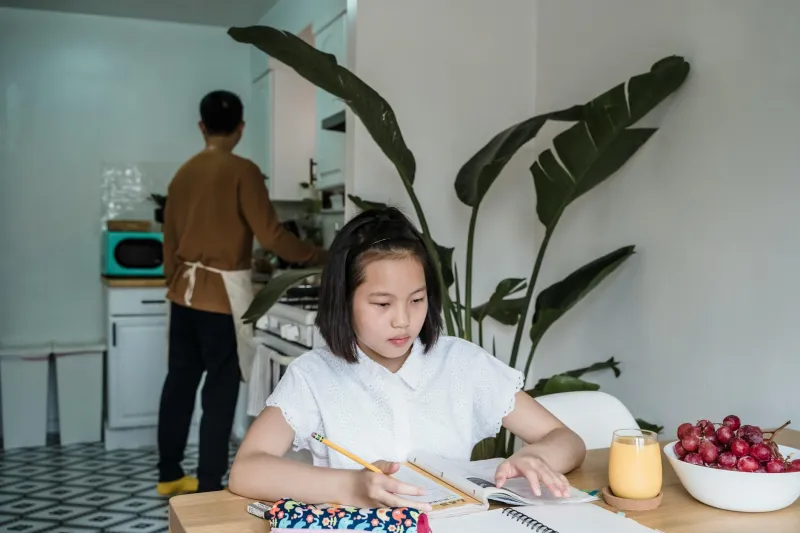
Today, that same third-grader carries home a backpack that weighs nearly as much as they do, packed with assignments that will consume the next three hours. The dining room table has become a permanent homework station, family dinners are interrupted by math problems, and bedtime battles now include negotiations over unfinished projects.
When School Actually Ended at 3 PM
A generation ago, the school bell at 3 PM meant freedom. Kids poured out of brick buildings and scattered like dandelion seeds—some to pickup baseball games in empty lots, others to creek beds and tree houses, many simply to wander neighborhoods where the biggest decision was whether to stop at the corner store for penny candy.
Homework existed, but it served a different purpose. Teachers assigned brief exercises to reinforce what students had learned that day—maybe 20 math problems or a single page of cursive practice. The unspoken rule was simple: homework should take about as many minutes as the child's grade level. A fourth-grader might spend 40 minutes total, then close the books for good.
Parents helped when asked, but homework was largely the child's domain. It was preparation for independence, not a family project requiring color printers, poster board, and parental project management skills that would impress a Fortune 500 company.
The Great Homework Inflation
Sometime between then and now, homework underwent what researchers call "the great inflation." What started as 15-minute reinforcement exercises ballooned into multi-hour marathons that stretch well past bedtime.
By 2003, the average elementary student was spending 25 minutes nightly on homework—nearly double the 1980s average. Middle schoolers went from 30 minutes to over an hour. High schoolers, who once might have spent an hour on assignments, now average nearly three hours per night, not counting test preparation and long-term projects.
The transformation wasn't gradual—it was seismic. Somewhere along the way, childhood afternoons disappeared into three-ring binders.
The Anxiety Engine
What drove this dramatic shift? The answer lies in a perfect storm of American anxiety that began brewing in the 1980s and reached full force by the 2000s.
First came the standardized testing revolution. As schools faced increasing pressure to demonstrate student achievement through test scores, homework became viewed as essential preparation. More practice meant better scores, the thinking went, so more homework must be better for everyone.
Simultaneously, college admissions grew increasingly competitive. Parents who had waltzed into state universities with B averages watched their own children stress over weighted GPAs and Advanced Placement coursework that didn't exist a generation earlier. If kindergarteners in South Korea were doing calculus (they weren't, but the myth persisted), then American kindergarteners needed more homework to keep up.
The rise of helicopter parenting added another layer. Parents who had roamed freely as children now orchestrated their own kids' lives with military precision. Homework became another opportunity for parental involvement, another chance to ensure their child's success in an increasingly uncertain world.
When Family Time Became Homework Time
Perhaps nowhere is the change more visible than around American dinner tables. In 1975, families gathered for evening meals that lasted an average of 90 minutes—time for conversation, laughter, and the kind of unstructured interaction that builds family bonds.
Today's family dinners average 20 minutes and compete with homework deadlines. Parents have become homework supervisors, their evenings consumed by the same assignments their children struggled with all afternoon. Kitchen tables double as workstations. Living rooms echo with the frustrated sighs of parents trying to decipher "new math" and children melting down over projects due tomorrow.
The ripple effects extend far beyond academics. Free play—the unstructured time that child development experts consider essential for creativity, problem-solving, and emotional growth—has largely vanished from American childhood. Kids who once had hours to pursue their own interests now shuttle between homework and adult-organized activities, leaving little room for the kind of boredom that sparks imagination.
The Lost Art of Being a Kid
What disappeared when homework colonized childhood afternoons wasn't just free time—it was a fundamentally different relationship with learning and discovery.
Children who once spent hours building elaborate Lego cities learned engineering through play. Kids who organized neighborhood kickball games developed leadership and conflict resolution skills no worksheet could teach. The child who spent an entire summer afternoon reading under a tree cultivated a love of literature that no assigned book report could match.
These weren't wasted hours—they were the laboratory where children learned to be human beings. They developed independence, creativity, and resilience through trial and error, without adult intervention or assessment rubrics.
The Weight of the Backpack
Today's elementary school backpacks tell the story in stark physical terms. The American Academy of Pediatrics recommends that children carry no more than 10-20% of their body weight, yet many kids haul packs weighing 30 pounds or more—the equivalent of an adult carrying a 60-pound load to work each day.
But the real weight isn't physical. It's the weight of expectations that have fundamentally altered what it means to be a child in America. Where childhood once offered a gradual transition from play to responsibility, today's kids face adult-level pressure from the moment they can hold a pencil.
The homework revolution promised to prepare children for an increasingly competitive world. Instead, it may have robbed them of the very experiences—unstructured play, family connection, and simple childhood joy—that actually build the resilience and creativity they'll need as adults.
Somewhere between 1975 and today, we forgot that childhood isn't just preparation for life—it is life itself. And perhaps it's time we remembered what we lost when the school day stopped ending at the bell.