Must-See TV Is Dead. Here's What Happened to the Night We All Watched Together.
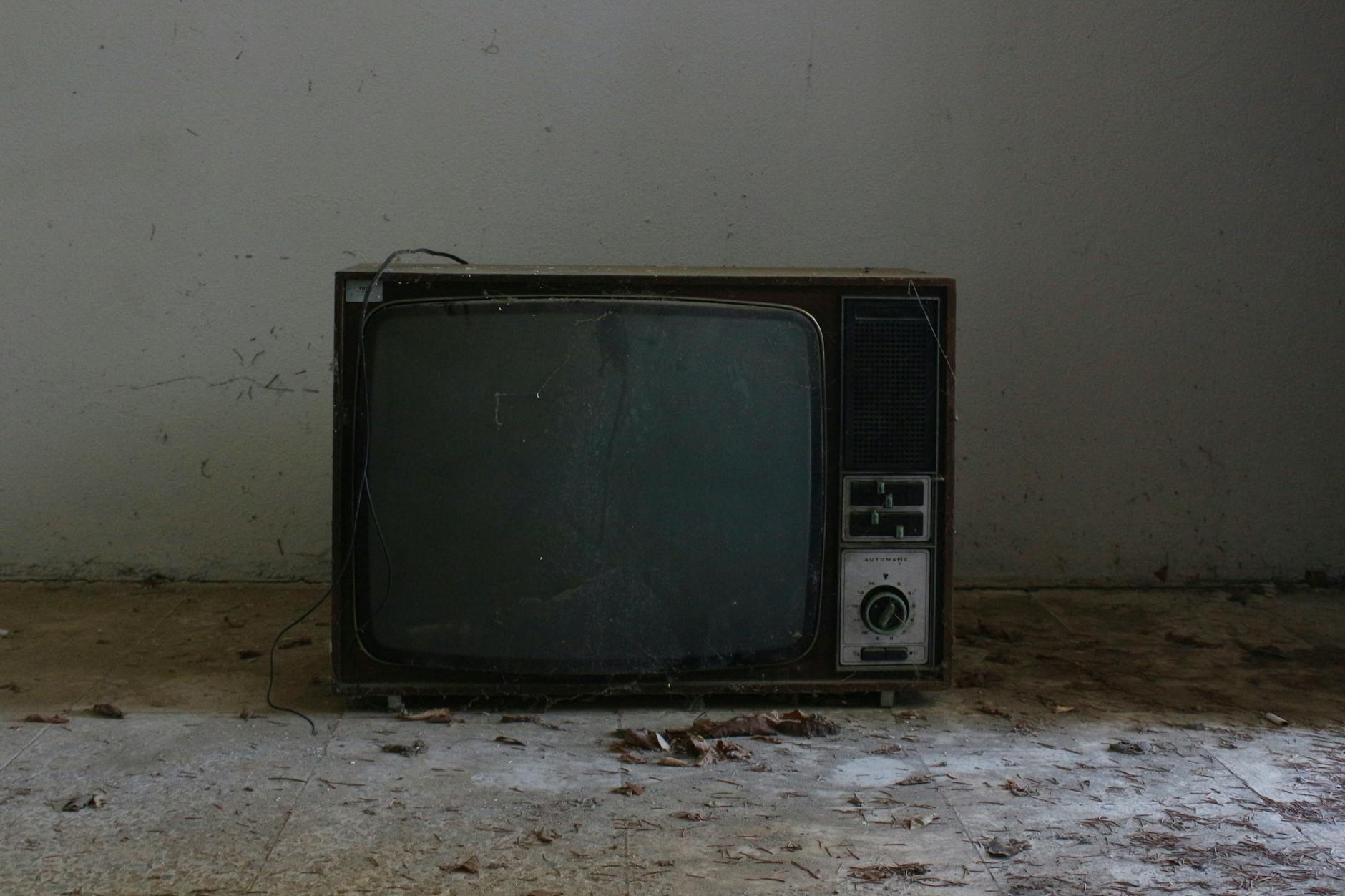
Must-See TV Is Dead. Here's What Happened to the Night We All Watched Together.
Thursday, May 14, 1998. An estimated 76 million Americans sat down in front of their televisions at the same moment to watch the final episode of Seinfeld. Restaurants emptied out. Traffic thinned. People gathered in living rooms, bars, and college dorm lounges. Nobody wanted to miss it — and nobody wanted to miss it alone.
That kind of moment is almost impossible to manufacture today. And understanding why tells you something important about how profoundly the way we watch television has changed.
The Three-Channel Universe
For most of the 20th century, American television was a shared civic experience by necessity. Through the 1950s, 60s, and well into the 70s, viewers had three choices: ABC, NBC, or CBS. If you wanted to watch something, you watched what was on. You consulted the TV Guide. You planned your week around it.
This scarcity created something unexpected: community. When M*A*S*H aired its series finale in February 1983, 106 million people watched — still the most-watched scripted broadcast in American television history. The next morning, it was all anyone talked about. Teachers brought it up in class. It was assumed, correctly, that nearly everyone had seen it.
The ritual of appointment viewing was deeply embedded in how families structured their evenings. Saturday morning cartoons were a genuine cultural institution for children. Sunday night meant 60 Minutes and then Murder She Wrote. Friday night in the early 90s meant TGIF on ABC — Full House, Family Matters, Step by Step — a lineup that shaped an entire generation's sense of what Friday felt like.
Waiting was part of the experience. A week between episodes wasn't a flaw in the system. It was the rhythm. You talked about what happened. You speculated about what might happen next. The anticipation was its own kind of entertainment.
Cable Cracks the Wall
The first real disruption came not from the internet but from cable. By the late 1980s, households with cable access had expanded dramatically, and suddenly the three-network monopoly had competition — dozens of channels, then hundreds. MTV changed how young people consumed music and culture. CNN made news a 24-hour proposition. ESPN turned sports viewing into something that never really had to stop.
But even with cable, the fundamental model held. Shows still aired on schedules. Viewers still gathered at specific times. HBO's prestige dramas in the late 1990s and early 2000s — The Sopranos, The Wire, Sex and the City — created some of the most talked-about television in history, and they did it the old-fashioned way: one episode, one week at a time.
The VCR gave people the ability to record and time-shift, but relatively few used it consistently. The effort involved — finding a blank tape, programming the thing correctly, remembering to do it — meant most people still watched live. The shared moment survived.
The Stream Breaks the Dam
Netflix launched its streaming service in 2007. For the first few years, the library was modest and the quality was uneven. Then, in 2013, the company released all 13 episodes of House of Cards at once. It was a deliberate provocation — a direct challenge to the episodic, scheduled model that had defined television for six decades.
Binge-watching wasn't invented by Netflix, but Netflix normalized it. And once it was normal, the old rhythm shattered.
Today, Americans have access to a staggering volume of content. Netflix alone has spent over $17 billion annually on original programming. Add Disney+, HBO Max, Apple TV+, Amazon Prime Video, Peacock, Paramount+, and Hulu, and the choices become genuinely overwhelming. There are more scripted television series produced each year now than most people could watch in a lifetime.
The numbers reflect the shift. In 1980, the average American household received about 10 television channels. Today, that same household can access tens of thousands of titles on demand, across multiple devices, at any hour. Roughly 80 percent of American adults subscribe to at least one streaming service. Many subscribe to four or more.
The Paradox of Infinite Choice
Here's the strange part: all that abundance hasn't necessarily made watching television more satisfying. Researchers who study decision-making have a name for it — "choice overload" — the phenomenon where too many options leads to paralysis, dissatisfaction, or both.
Anyone who has spent 25 minutes scrolling through a streaming menu only to give up and rewatch The Office for the third time understands this intuitively. The endless scroll has replaced the TV Guide, but it hasn't replaced the ease of just knowing what's on.
And the shared cultural moment? That's largely gone. When a show becomes a genuine phenomenon today — Squid Game, The Last of Us, Succession — it tends to arrive in a burst and then disperse. People watch at different speeds. Social media conversations are full of spoiler warnings and staggered reactions. The water-cooler conversation still happens, but it's complicated by the fact that nobody's at the same point in the story.
The season finale used to be a national event. Now it's just another Thursday.
What We Traded Away
It would be easy to romanticize the three-channel era. The programming was often mediocre, the representation was narrow, and if you missed your show, it was simply gone until summer reruns. The current landscape, for all its overwhelming breadth, genuinely does offer more interesting, more diverse, and more ambitious storytelling than any previous era of television.
But something real was exchanged in the bargain. The experience of watching television used to connect people to something larger than themselves — a shared national rhythm, a common cultural reference point, the simple fact of knowing that millions of other people were watching the same thing at the same moment.
That feeling — of being part of an audience rather than just a viewer — is what drifted away when the schedule did. We gained control. We lost the crowd.