The Guy Behind the Counter Had All the Answers: How Fixing Things Became a Box Store Scavenger Hunt
The Guy Behind the Counter Had All the Answers: How Fixing Things Became a Box Store Scavenger Hunt
Walk into a Home Depot today, and you'll encounter 130,000 square feet of everything you could possibly need to fix, build, or improve your home. The fluorescent lights stretch endlessly overhead. The aisles run longer than city blocks. Somewhere in this cathedral of commerce, buried among 40,000 different products, is exactly what you need to stop that dripping faucet.
Good luck finding it.
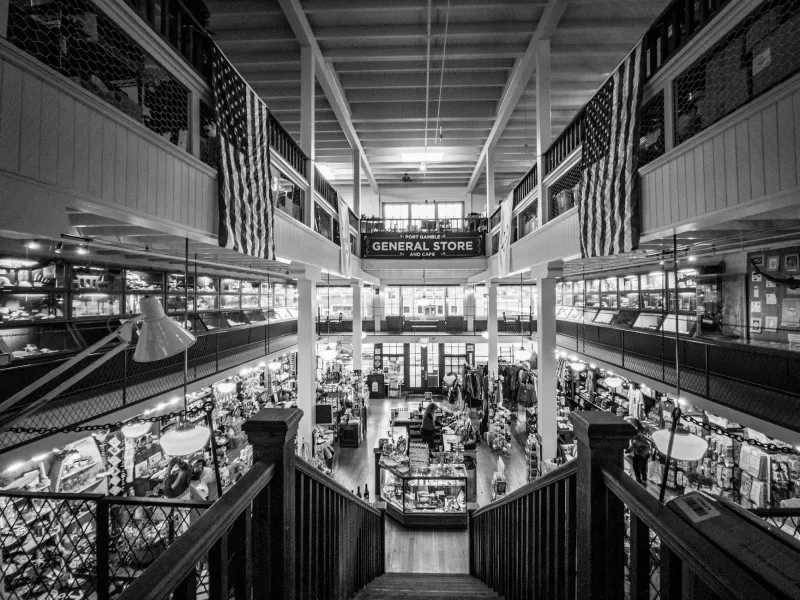
Forty years ago, you would have walked three blocks to Murphy's Hardware. The bell above the door would have announced your arrival. Murphy himself — or his son, or the guy who'd worked there since the Eisenhower administration — would have looked up from behind the counter.
"What's the problem?" he'd ask.
You'd describe the drip. He'd nod knowingly, disappear into the maze of narrow aisles for thirty seconds, and return with a small paper bag containing a washer that cost forty-seven cents. Problem solved. Total time elapsed: four minutes.
When Hardware Stores Were Neighborhood Institutions
The old-school hardware store wasn't just a retail establishment — it was a repository of practical knowledge. These places were typically family-owned operations that had been serving the same community for decades. The owner knew every house in the neighborhood, remembered what kind of pipes were installed when, and could diagnose problems from cryptic descriptions.
"My basement makes a weird gurgling sound when I flush upstairs" was enough information. He'd hand you a plunger and a bottle of drain cleaner, maybe throw in some advice about not flushing certain things.
The stores themselves were marvels of efficient organization. Every square inch served a purpose. Bins of screws, bolts, and washers were sorted by size and thread count. Paint was mixed to order from a base of six colors. The key-cutting machine sat on the counter, and yes, they could make you a copy of that weird old skeleton key.
Inventory was curated, not comprehensive. Murphy didn't stock seventeen different types of drill bits. He stocked the ones that worked for the jobs people in the neighborhood actually needed to do.
The Rise of the Big Box Experience
Sometime in the 1980s, everything changed. The big-box retailers arrived with a simple promise: everything you could ever need, all under one roof, at the lowest possible price.
Home Depot opened its first store in 1978. By 2000, there were over 1,000 locations. Lowe's followed a similar trajectory. The math was compelling — why maintain expensive inventory in thousands of small stores when you could centralize everything in massive warehouses?
The trade-offs became apparent quickly, but we accepted them because the benefits seemed so obvious. Selection exploded from hundreds of items to tens of thousands. Prices dropped. Hours extended — you could buy lumber at 9 PM on a Sunday.
But something fundamental was lost in translation.
The Knowledge Gap
In the old hardware store, expertise came free with every purchase. The guy behind the counter had probably installed, repaired, or replaced whatever you were buying dozens of times. He knew which brands lasted and which ones didn't. He could spot a DIY disaster in the making and gently steer you toward a better approach.
Today's big-box experience operates on a different model. The orange-aproned associate you eventually locate might be knowledgeable, but they're just as likely to be a college student who started last Tuesday. The store's computer system can tell you what aisle the pipe fittings are in, but it can't diagnose why your water pressure is low.
The institutional knowledge that once lived in the minds of hardware store owners has been replaced by YouTube videos and online forums. We've traded the certainty of local expertise for the uncertainty of crowdsourced advice.
The Paradox of Choice
The modern hardware shopping experience presents us with what psychologist Barry Schwartz called the "paradox of choice." When Murphy's stocked three types of exterior paint, choosing was simple. When Home Depot stocks 200 varieties, each decision becomes an research project.
Stand in the fastener aisle of any big-box store and count the options. Hundreds of different screws, bolts, washers, and anchors, each with specific applications that aren't always clear from the packaging. The old hardware store would have had a dozen options, but the owner would have known exactly which one you needed.
We've gained selection but lost curation. We've gained convenience but lost guidance.
What We Didn't Realize We Were Losing
The disappearance of the neighborhood hardware store represents more than just a retail evolution — it marked the end of an entire ecosystem of local expertise. These stores were informal community colleges for practical skills, places where knowledge passed from one generation to the next.
They were also economic anchors. The hardware store owner lived in the community, sent his kids to local schools, sponsored Little League teams. The profits stayed local. When these stores closed, entire downtown districts often followed.
The efficiency gains are undeniable. Big-box retailers can offer selection and pricing that small stores never could. But efficiency isn't the only metric that matters.
The Modern Reality
Today, we navigate our home improvement projects with smartphone apps, online reviews, and tutorial videos. We research products for hours before buying them, cross-reference prices across multiple websites, and read through dozens of customer reviews.
We've become our own hardware store experts, armed with more information than Murphy ever had access to. But information isn't the same as wisdom, and research isn't the same as experience.
The next time you're wandering the endless aisles of a big-box store, searching for an associate to answer a simple question, remember: there used to be a guy who knew exactly what you needed. He's gone now, but the dripping faucet remains.