When Your Mechanic Knew Your Transmission Better Than You Did
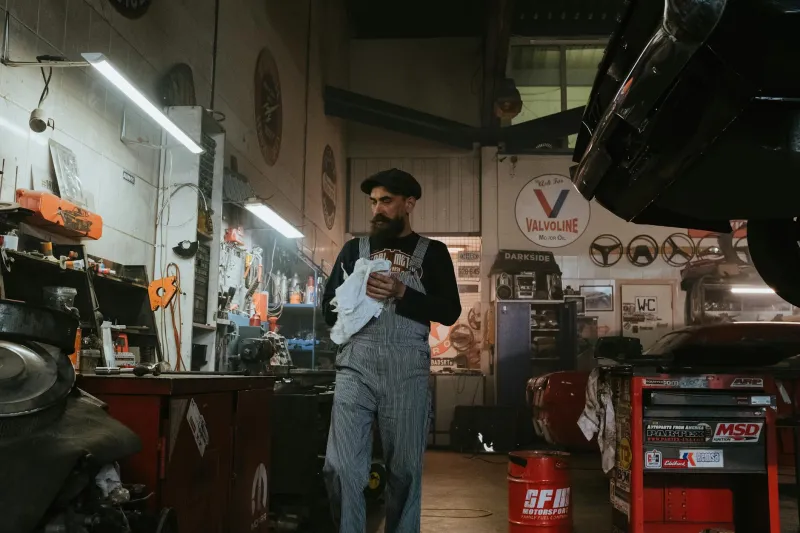
When Your Mechanic Knew Your Transmission Better Than You Did
There was a time when getting your car fixed meant driving to the end of your block, pulling into a bay that smelled like motor oil and coffee, and having a conversation with someone who remembered exactly what went wrong with your Buick last spring.
Joe knew your car made that weird clicking sound when it was cold. He'd spot your headlights pulling in and already be reaching for the right wrench. When you asked what was wrong, he'd wipe his hands on a rag that had seen a thousand repairs and explain it in words that made sense, not computer codes that sounded like alien language.
That America—where your mechanic was part therapist, part magician, and completely irreplaceable—has quietly disappeared while we were busy updating our phones.
The Corner Garage That Fixed Everything
Walk through any American neighborhood built before 1980, and you'll still see the bones of what used to be. That corner building with the wide doors and oil stains on the concrete? That was Mike's Garage, or Tony's Auto, or Johnson & Sons. Places where three generations of the same family kept the whole neighborhood running.
These weren't corporate franchises with uniforms and laminated price lists. They were small businesses where the owner lived two streets over and his kids played Little League with yours. The waiting area had mismatched chairs, a coffee pot that had been brewing since the Carter administration, and magazines from three years ago that nobody minded reading.
Most importantly, they had something that's almost extinct today: institutional memory. Your mechanic didn't just fix cars—he knew cars. He knew that your model had a tendency for the alternator to go around 80,000 miles. He knew which parts were worth replacing and which ones you could nurse along for another year. He knew when you were being sold a bill of goods by someone else.
When Cars Were Mechanical, Not Digital
Back then, cars were essentially sophisticated mechanical devices. Sure, they had electrical systems, but most problems could be diagnosed by someone who understood how engines, transmissions, and brakes actually worked. A good mechanic could listen to your engine and tell you what was wrong before he even popped the hood.
Repairs were often fixes, not replacements. A worn part could be rebuilt. A small problem could be patched. Your neighborhood mechanic had drawers full of used parts that came from other cars, and he knew which ones were still good. Waste not, want not.
The relationship was built on trust because it had to be. You couldn't Google "transmission repair near me" and read 847 reviews. You couldn't get a second opinion from YouTube. You found someone good, you stuck with them, and they took care of you because their reputation was everything.
The Computer Revolution Under the Hood
Somewhere around the 1990s, cars stopped being mechanical and started being computers on wheels. Today's vehicles have more processing power than the spacecraft that landed on the moon, and dozens of systems that talk to each other in languages only diagnostic machines understand.
Modern cars are undeniably better. They're safer, more efficient, more reliable, and they last longer than anything from the old days. But they've also become impossible for most independent mechanics to service properly. When your check engine light comes on, it could be one of 200 different problems, and figuring out which one requires equipment that costs more than most small shops make in a year.
The Service Center Experience
Today, getting your car repaired means driving to a dealership service center that looks more like a hotel lobby than a garage. You'll be greeted by a service advisor—not a mechanic—who types your complaints into a computer system and gives you an estimate based on what the screen tells them.
The actual work happens in a bay you can't see, performed by technicians who specialize in specific systems and may never actually meet you. The diagnostic process involves plugging your car into a machine that spits out codes, and the repair usually means replacing entire modules rather than fixing individual components.
The bill, when it comes, often includes charges for "diagnostic time," "shop supplies," and labor rates that would make a lawyer blush. What used to cost $200 and take an afternoon now costs $800 and takes three days because they had to order parts from three states away.
What We Lost in Translation
The disappearance of the neighborhood mechanic represents more than just a shift in how we fix our cars. It's emblematic of how many personal relationships in American life have been replaced by corporate transactions.
Your old mechanic would tell you when you didn't need a repair. He'd suggest waiting six months on that brake job if money was tight, or recommend a good used car when yours was beyond saving. Today's service centers have quotas to meet and systems designed to maximize revenue per customer visit.
We've gained reliability and lost relationships. We've gained precision and lost the human judgment that knew when good enough was good enough. We've gained technology and lost the ability to understand what's happening under our own hoods.
The Drift Continues
As cars become increasingly complex and electric vehicles start replacing internal combustion engines entirely, the gap between driver and machine will only widen. The neighborhood garage, already an endangered species, may soon be extinct entirely.
Some independent shops are adapting, investing in new equipment and training to service modern vehicles. But they're fighting an uphill battle against manufacturers who design systems to require dealer-only tools and parts that can't be sourced independently.
The next time you're sitting in a sterile service center waiting room, paying $150 an hour for someone to plug your car into a computer, remember when getting your car fixed meant having a conversation with someone who actually cared whether you made it home safely. That conversation, like so many others in American life, has been lost in translation.