When Your Pills Came to You: The Death of America's Door-to-Door Drugstore
In 1952, if you called Kowalski's Pharmacy on Third Street with a prescription, Eddie Kowalski himself would hop on his bicycle within the hour and deliver your medication to your front door. No delivery fee. No minimum order. Just a guy who knew that Mrs. Henderson's arthritis flared up when it rained and that the Murphy kid was allergic to penicillin.
 Photo: Kowalski's Pharmacy, via yt3.googleusercontent.com
Today, getting prescription medication involves automated phone trees, insurance authorization delays, and drive-through windows where a masked technician slides your pills through a drawer without making eye contact.
The Corner Store That Knew Your Medical History
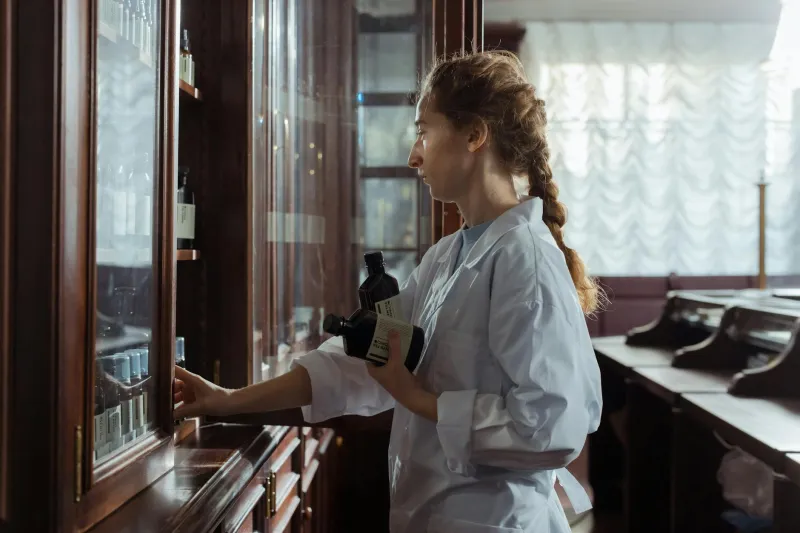
The neighborhood pharmacy of the 1950s and 60s operated more like a family doctor's office than a retail transaction center. Your pharmacist knew your medical history not because it was stored in a computer system, but because he'd been filling your prescriptions for twenty years. He knew your mother's heart condition, your father's diabetes, and could spot a potential drug interaction before the doctor even thought to check.
These weren't just pill-dispensing operations. They were community health hubs where you could get your blood pressure checked for free, ask questions about over-the-counter medications, and receive genuine medical advice from someone who'd studied pharmacology and actually cared about your wellbeing.
The pharmacist often functioned as the neighborhood's informal healthcare consultant. Feeling under the weather? Skip the doctor's office and ask Charlie at the pharmacy what he thought about your symptoms. Need to know if that cough syrup was safe to take with your heart medication? Charlie knew without looking it up.
When Medicine Came to You
Perhaps most remarkably, many neighborhood pharmacies offered free delivery service as standard practice. This wasn't marketed as a premium convenience feature – it was simply what you did for your neighbors. If Mrs. Patterson couldn't make it to the store because of her hip replacement, the prescription came to Mrs. Patterson.
Pharmacists delivered medications by bicycle, on foot, or in small delivery trucks. They knew every street in the neighborhood and often had keys to regular customers' homes for emergency deliveries. The idea of charging someone extra for bringing them their life-saving medication would have seemed absurd.
Delivery wasn't just about convenience – it was about care. Pharmacists could check on elderly customers, notice if someone seemed confused about their medication schedule, and provide impromptu wellness checks that today's healthcare system desperately lacks.
The Corporate Takeover
The transformation began in the 1970s as chain pharmacies started displacing independent drugstores. Economies of scale meant lower prices, but they also meant the end of personal relationships between pharmacists and patients. The guy behind the counter became an interchangeable employee rather than a trusted healthcare advisor.
By the 1990s, pharmacy chains had absorbed most independent operations. The focus shifted from personalized care to efficient processing. Prescription filling became an assembly-line operation designed to handle volume rather than provide individualized attention.
Today's pharmacy experience reflects this corporate efficiency model. You're more likely to interact with a pharmacy technician than an actual pharmacist. Your prescription history exists in a database rather than in someone's memory. And the idea of free delivery has been replaced by premium subscription services that charge monthly fees for what was once considered basic customer service.
The Modern Medication Marathon
Picking up prescriptions today often requires planning like a military operation. First, you navigate an automated phone system that asks for your birth date, insurance information, and prescription number before informing you that your medication isn't ready. Then you drive to the pharmacy, wait in line behind twelve other people, only to discover your insurance requires prior authorization for a medication you've been taking for three years.
The drive-through window, marketed as convenience, actually represents the complete elimination of human interaction from healthcare. You slide your ID through a drawer, wait while someone processes your information on a computer screen, and receive your medication through the same impersonal slot.
Many chain pharmacies have eliminated their delivery services entirely, or offer them only through third-party apps that charge delivery fees, service charges, and tips that can double the cost of your prescription.
What We Lost in the Translation
The shift from neighborhood pharmacies to corporate chains represents more than just a business model change – it reflects a fundamental transformation in how Americans receive healthcare. We traded personal relationships for efficiency, local knowledge for corporate systems, and community care for transactional processing.
The neighborhood pharmacist who knew your family's medical history and delivered your medications for free wasn't just providing a service – he was participating in a community healthcare network that no longer exists. Today's pharmacy experience, despite technological advances and broader medication access, lacks the human element that once made picking up prescriptions feel like visiting a trusted friend rather than completing a corporate transaction.
The pills might be the same, but the care that came with them has quietly disappeared from American life.