Your Suitcase Had a Lifetime Warranty and You Actually Used It: When Americans Bought Things Once
The Purchase That Lasted Longer Than Your Marriage
In 1975, a good piece of luggage cost about $150—roughly three weeks of wages for the average American worker. That same suitcase would travel to forty-seven states, survive six job relocations, accompany two honeymoons, and still be sturdy enough to pass down to your children when you finally decided to upgrade. The leather developed character instead of falling apart. The brass hardware aged gracefully rather than breaking off.
This wasn't luxury shopping—it was normal shopping. Americans expected their possessions to last, and manufacturers designed products accordingly. The economic logic was simple: if people only bought one suitcase every thirty years, that suitcase better be worth buying. Quality wasn't a premium feature; it was the basic standard.
When Repair Shops Lined Main Street
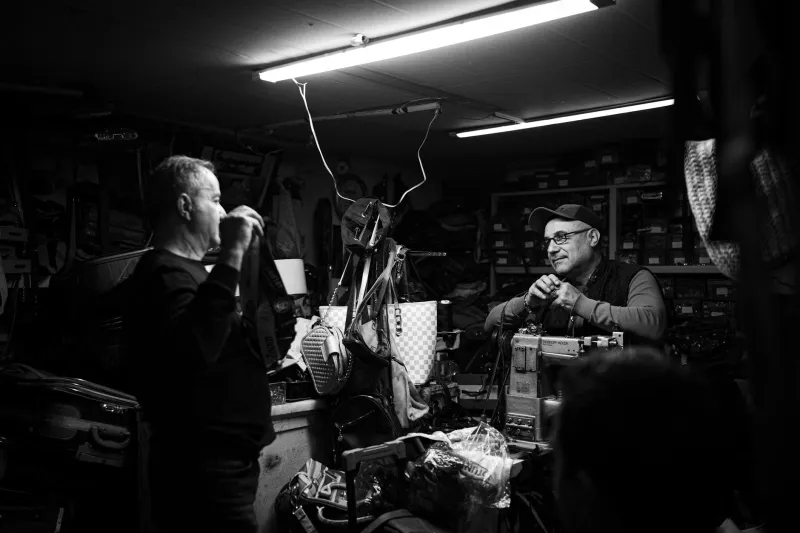
Every town had a guy who could fix anything. Shoe repair shops, luggage repair services, small appliance fix-it shops, and tailors who could make a ten-year-old coat look new again. These weren't specialty services for the wealthy—they were neighborhood businesses that kept middle-class Americans from having to replace perfectly functional items just because of minor damage.
The economics of repair made sense because the economics of replacement didn't. A new toaster cost $40 in 1980 dollars. Getting the old one fixed cost $8. The choice was obvious, and repair shops stayed busy because people brought in everything from broken zippers to wobbly table legs. The assumption was that most problems could be solved rather than requiring complete replacement.
Families had relationships with their repair people the same way they had relationships with their doctor or their banker. The shoe repair guy knew your foot size and your walking patterns. The appliance repair shop kept parts for your specific model of refrigerator, even if it was fifteen years old. These businesses thrived because Americans bought durable goods that were worth maintaining.
The Economics of Forever
Manufacturers built products to last because their business model depended on reputation rather than repeat sales. A company that made washing machines expected each customer to buy exactly one washing machine, tell their friends about it, and maybe buy another one in twenty years when they moved to a bigger house. Word-of-mouth marketing meant that a single defective product could damage sales for years.
This created an interesting economic dynamic: companies competed on durability rather than price. The selling point wasn't "cheap enough to replace when it breaks"—it was "so well-made you'll never need to replace it." Advertisements emphasized craftsmanship, materials quality, and longevity. A lifetime warranty wasn't a marketing gimmick; it was a reasonable promise.
Consumers saved up for major purchases because they knew those purchases would last. Buying a good winter coat was a five-year decision, not a seasonal one. People researched big purchases carefully, asked friends for recommendations, and expected to live with their choices for decades. The stakes felt higher because the commitment was longer.
When Your Stuff Had Stories
Durable goods accumulated history the way old houses do. The leather briefcase that went to every important business meeting for twenty years. The cast-iron skillet that cooked Sunday dinners for three decades. The winter coat that survived ten years of Chicago winters and still kept you warm. These items became part of family identity, carrying memories and meaning that went far beyond their functional purpose.
People developed emotional attachments to possessions because those possessions stuck around long enough to become familiar. The coffee maker that gurgled in a particular way every morning. The suitcase with the distinctive scuff mark from that trip to San Francisco. The kitchen table that hosted thousands of family meals. Longevity created intimacy between people and their things.
 Photo: San Francisco, via s-i.huffpost.com
This relationship extended to gifting and inheritance. Parents passed down tools, jewelry, and household items not just for sentimental reasons but because those items still had decades of useful life left. A good set of kitchen knives or a quality toolbox was a meaningful inheritance because it represented both craftsmanship and continued utility.
The Shift to Disposable Everything
Sometime in the 1990s, the economic equation flipped. Manufacturing costs plummeted while repair costs stayed constant, making replacement cheaper than maintenance for most consumer goods. A new toaster cost less than fixing the old one. A new suitcase cost less than repairing the broken wheel on the existing one. Americans adapted by changing their shopping habits, but they also changed their expectations.
The shift happened gradually, product category by product category. Electronics led the way—nobody expected a computer to last twenty years. But the disposable mindset spread to items that had traditionally been durable: luggage, small appliances, furniture, even clothing. The phrase "they don't make them like they used to" became common because manufacturers literally stopped making them like they used to.
Retailers encouraged this shift by making replacement more convenient than repair. Big box stores offered immediate availability and hassle-free returns, while repair shops required appointments, waiting periods, and uncertain outcomes. The friction of maintenance increased just as the friction of replacement decreased.
The Hidden Costs of Constant Replacement
What Americans gained in convenience and lower upfront costs, they lost in other ways. The constant cycle of buying, using, and discarding created a different relationship with possessions—more casual, less intentional, and ultimately more expensive over time. The $30 suitcase that breaks after two years costs more over a decade than the $300 suitcase that lasts fifteen years.
The psychological effects were subtler but equally significant. When everything is replaceable, nothing feels permanent. The accumulation of memories and meaning that comes with long-term ownership disappeared. Americans became consumers rather than owners, cycling through possessions rather than living with them.
The environmental impact was massive but largely invisible. The old model of buy-once-use-forever generated minimal waste. The new model of constant replacement created massive waste streams, but most Americans never saw where their discarded items ended up. The true cost of disposability was externalized to landfills and overseas recycling facilities.
What We Lost When Nothing Lasted
The shift from durable to disposable goods changed more than shopping habits—it changed how Americans relate to ownership itself. The patience required to save up for quality purchases. The satisfaction of using something well-made. The pride of maintaining possessions in good condition. The peace of mind that comes with owning things that won't break unexpectedly.
Perhaps most importantly, Americans lost the skill of choosing quality over convenience. When everything is designed to be replaced, the ability to recognize and value durability atrophies. The knowledge that previous generations had about materials, construction, and craftsmanship became irrelevant in a world where nothing was expected to last.
The suitcase that survived thirty years of travel wasn't just luggage—it was a symbol of a different economic philosophy, one that valued permanence over convenience and quality over quantity. That philosophy shaped not just what Americans bought, but how they thought about consumption, ownership, and the relationship between people and their possessions.