We Used to Drive to the Airport Just to Watch: The Day Flying Stopped Being Magic
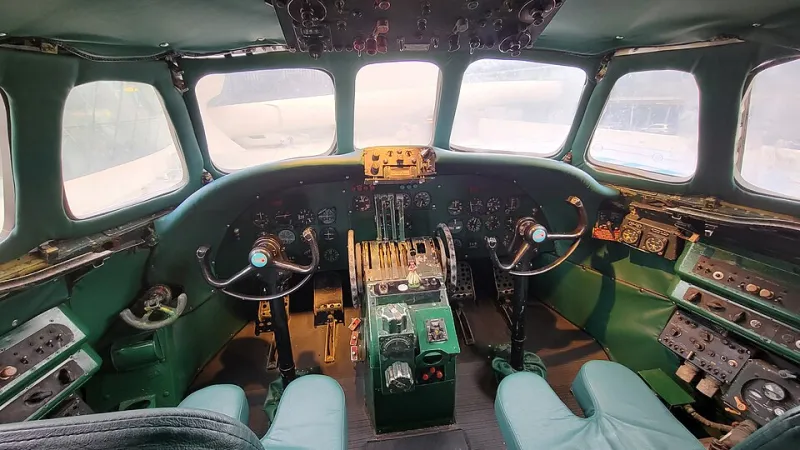
Photo: Charles from Port Chester, New York, CC BY 2.0, via Wikimedia Commons
There is a photograph that exists in some form in thousands of American family albums. A family stands at a chain-link fence or on an open observation deck. The adults are dressed as though they're going somewhere important, even though they're going nowhere at all. The kids are pointing at something just outside the frame. In the background, blurred but unmistakable, a propeller plane or an early jet is either landing or lifting off.
Nobody in the photograph has a ticket. They came to watch.
This was a normal thing to do in America for several decades of the twentieth century. The airport was a destination. The act of flight was a spectacle. And the families who drove out on a Sunday afternoon to stand near the runway and feel the ground shake as something enormous lifted into the sky were not considered eccentric. They were just paying attention to one of the most extraordinary things the modern world had produced.
Somewhere between then and now, we stopped paying attention.
When Terminals Were Open to Everyone
For most of commercial aviation's early history, American airports were genuinely public spaces in a way that today's traveler would find almost unrecognizable. Non-ticketed visitors could walk through the terminal, browse the shops, sit in the observation lounge, and watch flights depart and arrive with essentially no restriction.
The observation deck was a standard feature of mid-century American airports, and it was treated as a legitimate public amenity — not unlike a park or a museum. Airports like Chicago Midway, Los Angeles International, and Atlanta's old terminal had dedicated viewing areas where families could spend an afternoon watching operations unfold on the tarmac below.
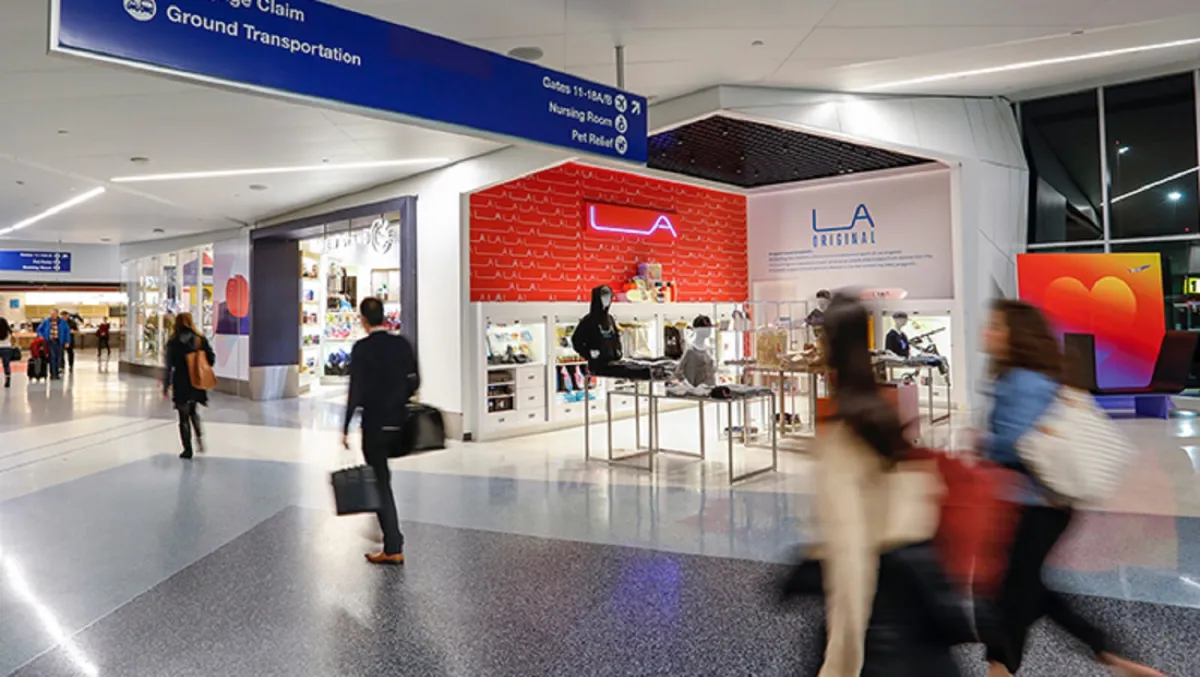 Photo: Los Angeles International, via images.eu.ctfassets.net
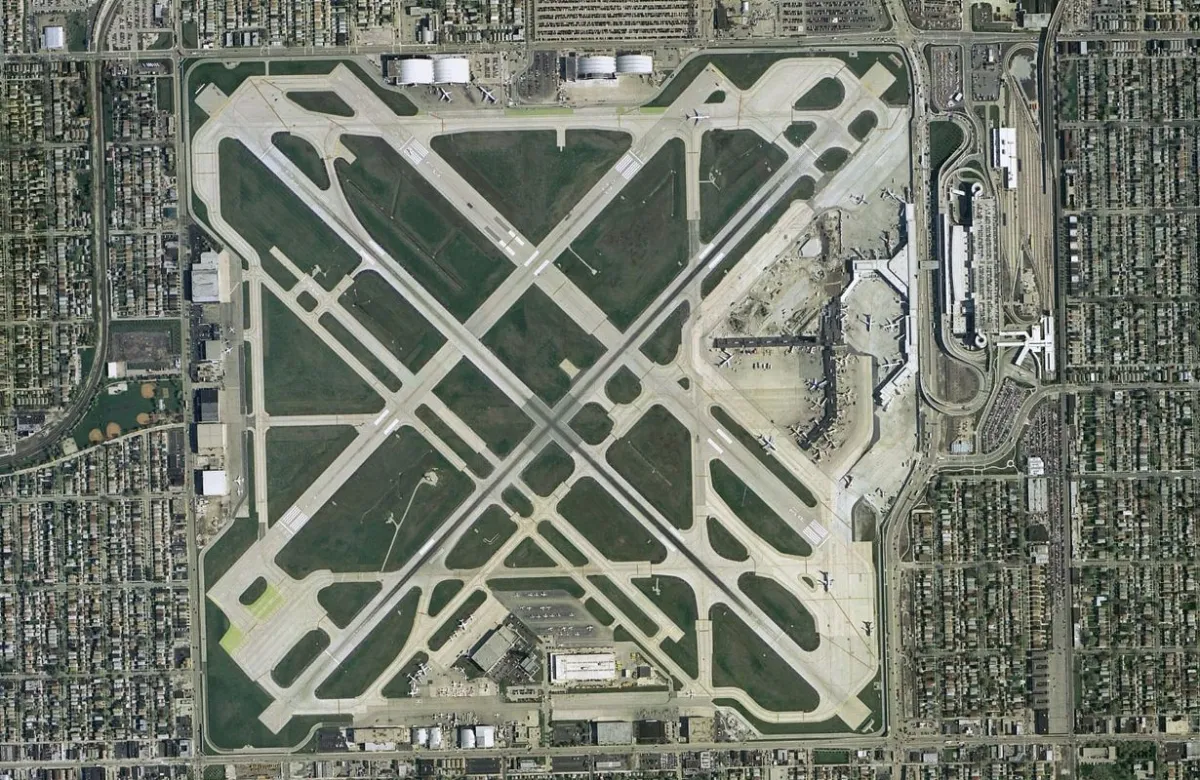 Photo: Chicago Midway, via image.arrivalguides.com
Gates were accessible to anyone. This meant that seeing someone off at the airport was a genuine goodbye — you walked them all the way to the door of the plane, or close to it, and you watched the aircraft push back from the window while they found their seat. Arrivals worked the same way in reverse. Meeting someone at the gate was an act of welcome that placed you right at the threshold of their return.
The airport was threaded through with human connection in a way that security checkpoints, by design, have made impossible.
The Plane as a Symbol of the Future
To understand why people drove to airports just to watch, you have to recover the cultural weight that aviation carried for most of the twentieth century.
Commercial flight was genuinely new within living memory for much of this period. The first scheduled passenger airline service in the United States began in 1914. By the time the jet age arrived in the late 1950s, plenty of Americans were old enough to remember a world without any commercial aviation at all. The airplane wasn't infrastructure. It was a marvel.
The jets that entered service in the late 1950s and 1960s — the Boeing 707, the Douglas DC-8 — were objects of genuine public fascination. They were faster, louder, and larger than anything most people had seen up close. Airlines understood this and leaned into it. Pan Am and TWA competed on glamour as aggressively as on price. Flight attendants were photographed like movie stars. Terminal architecture was designed to feel futuristic, because arriving at the airport was supposed to feel like stepping into tomorrow.
In that context, driving to the airport on a Sunday to watch planes made perfect sense. You were watching the future happen in real time. The roar of a jet engine overhead wasn't a nuisance. It was evidence that the world was becoming something extraordinary.
How Familiarity Did Its Work
The erosion of aviation's wonder was not the result of any single event. It was the slow, steady work of normalization.
As flying became more common and more affordable through the 1970s and 1980s, it gradually shifted in public perception from spectacle to service. The question stopped being can you believe this exists and started being why is this taking so long. Airlines responded to price competition by stripping out the glamour. Meals disappeared. Legroom contracted. The aesthetic ambition of mid-century terminal design gave way to the functional anonymity of structures built to process bodies efficiently.
Then came September 11, 2001, and the airport experience was fundamentally reorganized around security rather than welcome. The observation decks that remained were closed. The gates became restricted zones. The public space that had once invited anyone to come and witness the spectacle of flight was replaced by a checkpoint that treated everyone as a potential threat until proven otherwise.
This was not an irrational response to what happened. But the effect on the cultural experience of aviation was permanent. The airport stopped being a place you might go to feel something and became a place you endured in order to get somewhere else.
What Gets Lost When Wonder Becomes Routine
There's a version of this story that frames it as straightforward progress: flying is now safer, cheaper, and more accessible than it has ever been. More Americans fly today than at any point in history. The democratization of air travel is a genuine achievement.
All of that is true. And none of it quite addresses what was lost.
The families who drove to the airport on a Sunday afternoon to watch the planes were doing something that had real value, even if it was hard to articulate. They were maintaining a relationship with wonder — practicing the habit of being astonished by what human beings had figured out how to do. The airport was a place where the extraordinary was visible and accessible, where you could stand close enough to feel the physics of flight in your chest and remember that the world contained things worth marveling at.
That habit of maintained wonder is harder to locate now. Not because the miracle has diminished — a commercial aircraft lifting hundreds of people into the sky at five hundred miles per hour remains, objectively, an astonishing thing — but because familiarity has made it invisible.
We stopped driving to the airport to watch because we stopped seeing anything worth watching. And that shift, quiet as it was, cost us something that no cheaper airfare has replaced.