Before Doppler Radar Ruled Your Weekend: When Americans Trusted Their Bones Over Meteorologists
The Morning Glance That Decided Everything
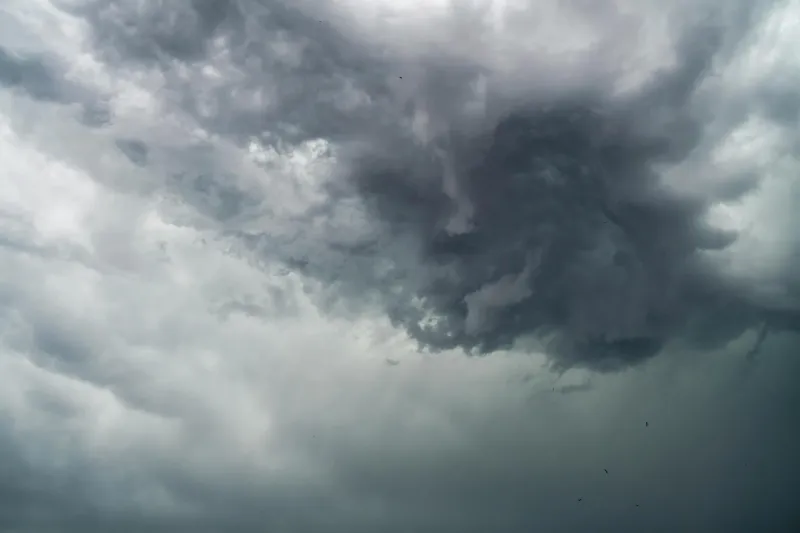
Every morning before coffee, Americans used to step outside and take a long look at the sky. Not at their phones—at the actual sky. They'd feel the wind direction, notice how the leaves were moving, and make a mental note about whether the air felt heavy or light. This thirty-second ritual determined whether they'd pack an umbrella, plan that barbecue, or decide if today was the day to finally paint the fence.
The weather forecast existed, sure. A cheerful meteorologist would appear on the evening news with a simple map showing sunny icons and cloud symbols for the next few days. But nobody expected precision. The forecast was more like a gentle suggestion than a scientific prediction, and Americans treated it accordingly.
When Your Grandmother Was the Weather Service
Families passed down weather wisdom like recipes. Red sky at night, sailor's delight. When smoke descends, good weather ends. If your joints ached, rain was coming. These weren't just folksy sayings—they were practical tools that actually worked. Three generations of farmers and fishermen had tested these observations, and they formed the backbone of how ordinary Americans read the natural world.
People knew their local patterns. They understood that storms in their region usually came from the southwest, that morning fog meant a clear afternoon, or that when the neighbor's cat started acting weird, a thunderstorm was probably six hours away. This wasn't superstition—it was hyperlocal knowledge accumulated over decades of paying attention.
Children learned to read clouds the way they learned to read books. Cumulus meant fair weather. Nimbus meant grab your jacket. The wispy cirrus clouds that looked like horse tails meant weather was changing, probably within 24 hours. Kids could spot the difference between a harmless summer shower and a serious storm just by watching how fast the clouds were moving.
The Anxiety That Came With Certainty
Today's weather apps promise minute-by-minute precipitation forecasts and radar loops that show exactly when the rain will start and stop. But this precision created a strange new problem: weather anxiety. Americans now cancel outdoor plans because there's a 30% chance of rain at 3 PM, even though a 30% chance means it probably won't rain at all.
We've traded adaptability for the illusion of control. A generation ago, people brought both sunscreen and a light jacket to outdoor events because they understood weather was unpredictable. They planned for multiple scenarios instead of trying to predict one perfect outcome. The backup plan wasn't a failure of forecasting—it was common sense.
The constant weather updates also changed how we experience weather itself. Instead of noticing that the wind shifted or that the pressure dropped, Americans now know a storm is coming because their phone told them. We've outsourced our environmental awareness to algorithms, losing touch with the natural world in the process.
When Weather Was Something You Lived With, Not Avoided
Before smartphones, Americans had a different relationship with uncertainty. They understood that some things couldn't be controlled or perfectly predicted, and they built flexibility into their lives accordingly. Outdoor weddings had tent backup plans. Baseball games got rained out, and people just went home. Farmers planted when the soil felt right, not when an app said moisture levels were optimal.
This acceptance of uncertainty extended beyond weather into a broader life philosophy. Americans were more comfortable with last-minute changes, more willing to adapt plans on the fly, and better at making decisions with incomplete information. The inability to know exactly what the weather would do tomorrow meant people got better at rolling with whatever actually happened.
The Lost Art of Reading the Sky
What we've lost isn't just weather wisdom—it's the daily practice of observing the natural world. That morning glance at the sky was also a moment of connection with the environment, a brief pause before the day's rush began. People noticed seasonal changes more acutely because they had to. They knew when the first frost typically arrived, when the spring rains usually started, and how long summer heat waves typically lasted in their area.
This observational skill made Americans more attuned to their surroundings in general. The same people who could predict rain by watching cloud formations were also more likely to notice when familiar birds returned in spring, when leaves started changing color, or when the angle of sunlight shifted with the seasons.
The hyperlocal knowledge that families accumulated over generations—which hills got more snow, which valleys stayed warmer, which way storms typically moved through town—has been replaced by generic regional forecasts that treat entire metropolitan areas as if they have identical microclimates.
Living in the Weather Instead of Avoiding It
Perhaps most importantly, Americans used to live in the weather instead of constantly trying to avoid it. They dressed for the season, planned activities that matched the climate, and understood that getting caught in an unexpected shower was just part of being outside. The goal wasn't to never be uncomfortable—it was to be prepared for discomfort when it inevitably arrived.
This relationship with uncertainty and discomfort created a different kind of resilience. People who couldn't predict exactly when it would rain learned to be okay with getting wet sometimes. They packed accordingly, dressed appropriately, and didn't let the possibility of imperfect weather keep them from living their lives.
The shift from weather wisdom to weather apps reflects a broader change in how Americans relate to uncertainty. We've gained precision but lost adaptability, traded environmental awareness for algorithmic predictions, and somehow become more anxious about weather even as our forecasts became more accurate. The sky still tells the same stories it always has—we've just forgotten how to read them.