Built From a Catalog, Standing a Hundred Years Later: When Americans Built Homes to Last Generations
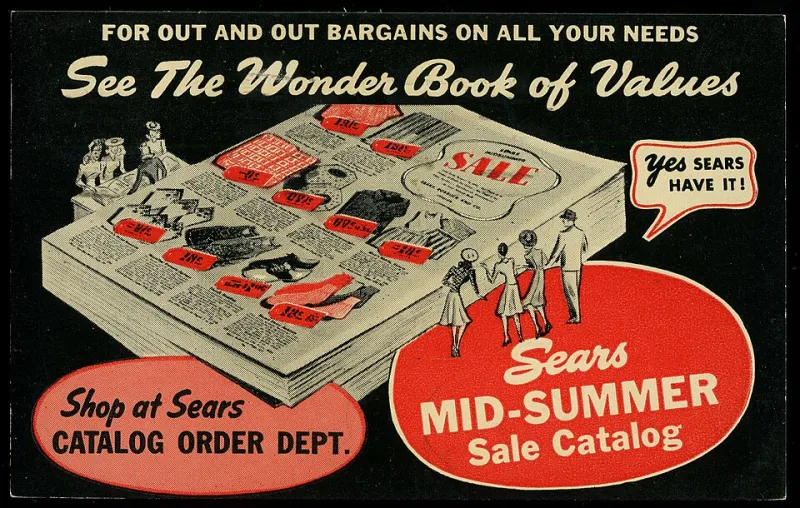
Photo: Steve Shook from Moscow, Idaho, USA, CC BY 2.0, via Wikimedia Commons
There's a house on a quiet street in Elgin, Illinois, that was ordered from a catalog in 1921. The family who bought it paid around $2,500, which included 30,000 pieces of pre-cut lumber, 750 pounds of nails, plumbing fixtures, windows, paint, and a 75-page instruction book. A railcar delivered it all to the local depot. The family hired local labor to assemble it. They moved in before Christmas.
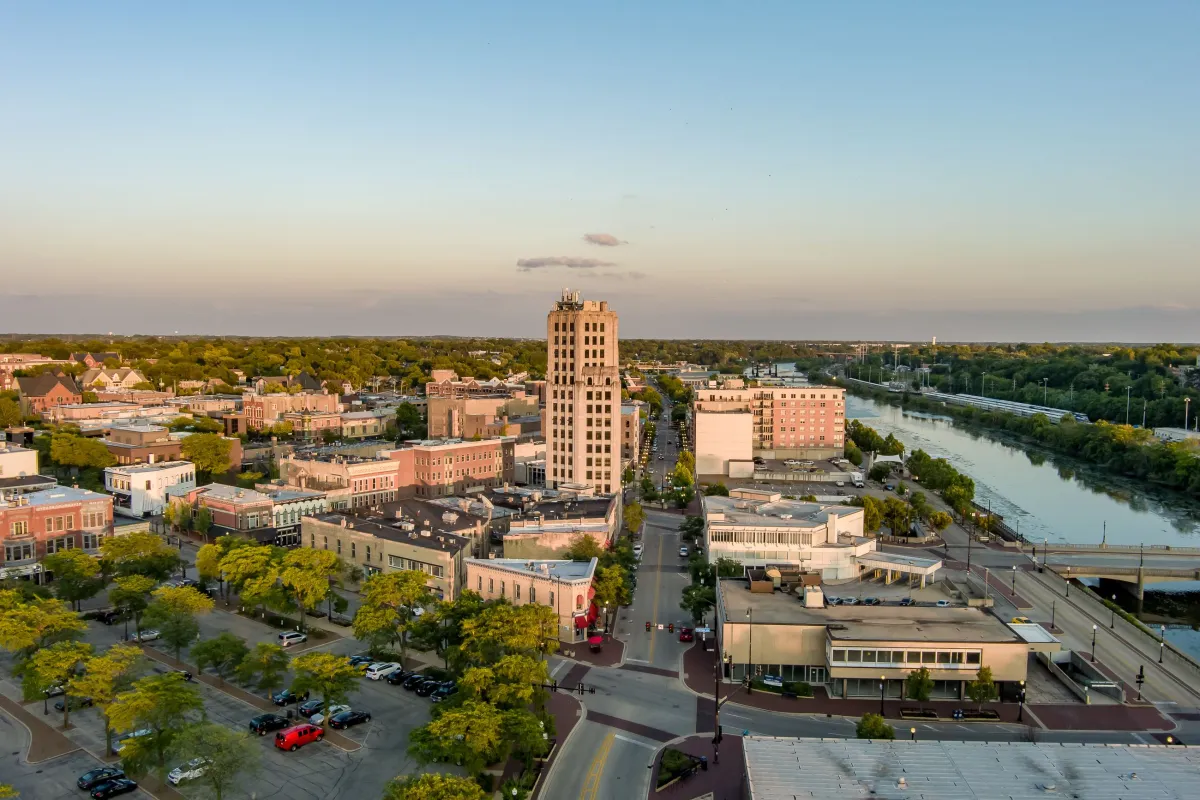 Photo: Elgin, Illinois, via elginil.gov
That house is still standing. People are still living in it. The porch hasn't rotted. The framing hasn't shifted. The bones are, by every account, exceptional — because in 1921, when Sears designed a home to sell through its catalog, the company understood that its reputation depended on the house lasting long enough for the neighbors to notice.
The Catalog Home Was a Serious Proposition
Most people who've heard of Sears kit homes assume they were modest, prefab affairs — the flat-pack furniture of their era. The reality was considerably more impressive. The Sears Modern Homes catalog, which ran from 1908 to 1940, offered more than 370 different designs ranging from simple two-bedroom bungalows to substantial two-story Colonials with five bedrooms, formal dining rooms, and full basements.
The engineering behind them was genuinely innovative. Sears used a balloon-frame construction system with pre-cut, pre-fitted lumber — a significant advance over traditional stick-built methods, which required skilled carpenters to measure and cut every piece on-site. The catalog homes could be assembled by people with modest carpentry skills, which was part of the appeal, but the materials themselves were high quality. Old-growth lumber. Solid doors. Hardware that was built to be used hard for decades.
Sears also offered mortgage financing through its own banking subsidiary, which made the homes accessible to working- and middle-class buyers who might not have qualified for conventional construction loans. You could order a house, finance it, and have it delivered — all through the same company. It was vertically integrated home ownership in an era before that phrase existed.
They Were Built to Be Kept
The phrase you hear from preservationists who study these homes is that they were built with permanence as the baseline assumption. The family buying a Sears kit home in 1915 or 1928 was not thinking about resale value or renovation timelines or what the market might do in five years. They were thinking about where their children would grow up and where they themselves might grow old.
That mindset shaped every decision, from the thickness of the walls to the quality of the hardware to the depth of the front porch. These weren't homes designed to impress buyers during a fifteen-minute showing. They were designed to be lived in, maintained, and passed down.
The evidence that this approach worked is the homes themselves. Preservation groups estimate that somewhere between 50,000 and 70,000 Sears kit homes survive today, scattered across thirty-eight states. They turn up in unexpected places — a neighborhood in Carlinville, Illinois, has an entire block of them, ordered by a local coal company as worker housing in 1918. Many have been recognized on the National Register of Historic Places. Historic preservation advocates have developed identification guides to help homeowners determine whether their house might be a Sears original, because the discovery is common enough to warrant the resource.
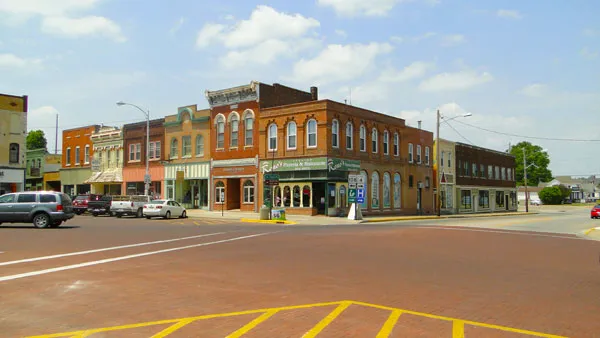 Photo: Carlinville, Illinois, via photos.smugmug.com
What Changed, and When
The Sears catalog home program ended in 1940, a casualty of the Depression and shifting economics in the construction industry. But the broader shift in how Americans thought about homebuilding took longer to arrive.
The postwar housing boom of the late 1940s and 1950s introduced a new model: fast, affordable, standardized construction at scale. Levittown in New York, and the dozens of communities it inspired, demonstrated that you could build houses quickly and cheaply enough to make homeownership accessible to returning veterans and young families who'd never have qualified for traditional construction. The tradeoff was that quality became secondary to speed and price.
Over the following decades, that tradeoff quietly became the industry standard. Builder-grade construction — the term itself is revealing — came to mean the minimum acceptable quality for a structure that would pass inspection and hold together long enough to be sold. Engineered lumber replaced old-growth timber. Hollow-core doors replaced solid wood. Fixtures were selected for price point rather than durability.
And the financial logic around homeownership shifted too. The thirty-year mortgage, once a tool for making permanent ownership accessible, gradually became a vehicle for short-term investment. Houses became assets to be leveraged, improved, and flipped — not places to be lived in for a lifetime. The average American moves roughly eleven times in their life, according to Census data. The idea of buying a home you intend to stay in for forty years has become genuinely unusual.
The House as Investment vs. The House as Home
There's a tension at the center of modern American homeownership that the Sears catalog era didn't have to navigate. When a house is primarily an investment, the calculus around quality changes. Why install a $400 faucet when a $60 one will last long enough to get through the sale? Why build walls that will stand for a century when the average ownership period is eight years?
The Sears homebuyer didn't ask those questions, because they weren't planning to sell. They were planning to live there until they couldn't, and then hand it to someone who would do the same. That time horizon changes everything about how you build and what you're willing to spend.
The irony is that the homes built with that permanence mindset have proven to be extraordinary long-term values. A Sears kit home purchased in the 1920s for a few thousand dollars, properly maintained, is today worth several hundred thousand dollars in most markets — not because it was designed as an investment, but because it was designed to last.
Something Worth Noticing
The next time you walk through a neighborhood with houses built before 1940, look at the details. The trim work around the windows. The depth of the eaves. The weight of the front door when you push it open. These are the fingerprints of a construction era that assumed the building would outlast the builder.
Somewhere on Elm Street, in a town you might not have heard of, there's a house that arrived in a railcar in 1923. The family that ordered it is long gone. But the house is still there, still solid, still doing exactly what it was designed to do.
That's a different relationship with permanence than we have now. And it's worth at least a moment's thought the next time you're standing in a new construction open house, running your hand along a hollow-core door.