The Wallet That Told the Whole Story: When Americans Actually Knew Where Their Money Went
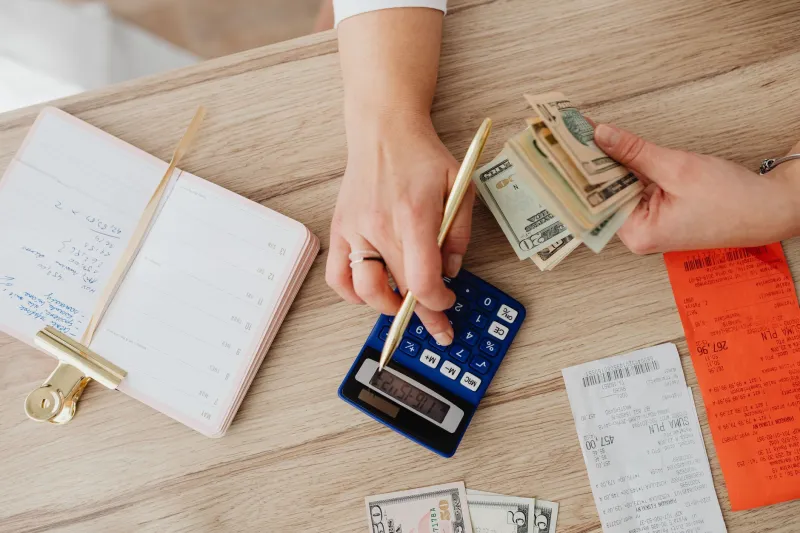
There's a small ritual that used to happen at kitchen tables across America on the first of every month. Someone — usually the person who handled the bills — would sit down with a stack of envelopes, a checkbook, and a pen. Each envelope held a statement. Each statement told a story: how much electricity the family used, how many calls went out on the phone line, what the balance on the department store account looked like after Christmas.
It wasn't a fun ritual. But it was an honest one. At the end of it, you knew exactly where you stood.
The Receipt as a Record
Before digital payments, before tap-to-pay, before the one-click checkout, buying something required a physical exchange. Cash changed hands. A receipt came back. That slip of paper — small enough to fold into a shirt pocket — was a complete and accurate record of what just happened.
The grocery receipt listed every item. The hardware store receipt showed the price of each bolt and bracket. The phone bill itemized every long-distance call, the date it was made, the number dialed, and how many minutes it lasted. There was nowhere to hide in a paper statement, and nothing was buried in fine print you'd agreed to on a screen you'd scrolled past at 11 p.m.
Americans of that era generally knew what things cost because they paid for them in ways that made the cost visible. A tank of gas required counting out dollars. A night at a motel required handing over cash or writing a check. The friction in those transactions wasn't just inconvenience — it was information. It made the spending real.
When Convenience Became Invisibility
The shift toward digital payments began gradually and accelerated quickly. Credit cards first, then debit cards, then online banking, then smartphone payments, then the subscription model that now governs so much of American consumer life.
Each step made spending easier. Each step also made it less visible.
The subscription economy is where the change becomes most stark. Streaming services, cloud storage, meal kits, fitness apps, news platforms, software licenses, premium tiers of free tools you use occasionally — they all bill quietly, monthly or annually, often with free trial periods that convert automatically and cancellation processes designed to discourage follow-through.
A 2022 survey found that Americans underestimate their monthly subscription spending by an average of nearly 200 dollars. That's not rounding error. That's a car payment. That's a utility bill. That's money leaving the account every month that the account holder has genuinely lost track of.
The Statement You Could Actually Read
There's a generational memory that people in their forties and fifties carry around without always naming it: the experience of a monthly statement that was genuinely legible. Not a scrollable transaction list with merchant codes and ambiguous descriptions, but a document organized to help you understand your own finances.
The phone bill of the 1980s and 1990s was almost pedagogical in its clarity. Local service, long distance, taxes, fees — each category separated and explained. You could look at it and immediately understand why the bill was higher this month than last. You could point to the specific calls that drove the number up and have a conversation with your teenager about it.
Today's equivalents are technically more detailed and practically harder to parse. A credit card statement might list three hundred transactions in a month, mixing a $4.99 app charge from two years ago that never got canceled with a restaurant you actually remember going to. The information is there. The understanding isn't.
Hidden Fees and the New Normal
The subscription model didn't just make spending harder to track — it created an entire architecture of charges designed to be overlooked. Annual price increases that arrive in an email most people don't open. Service fees added at checkout after you've already mentally committed to the purchase. Convenience fees for paying a bill online, which is now the only practical way to pay it.
Hotel booking platforms quote one price and charge another. Ticket sellers add fees that sometimes exceed the face value of the ticket itself. Streaming services that launched at $8 a month have quietly become $18, $22, $26 — each increase small enough to avoid cancellation, cumulative enough to matter.
The old price tag was a commitment. What you saw was what you paid. The new price is a starting point, a floor from which the actual charge ascends through a series of additions that only reveal themselves at the final confirmation screen.
The Cost of Not Noticing
None of this is accidental. The financial services industry, the subscription economy, and the payment technology sector have all benefited enormously from the shift toward invisible spending. Friction in transactions was always, from a business perspective, a problem to be solved. The solution — frictionless payment — turned out to transfer the benefit of awareness from the consumer to the seller.
When spending requires no conscious act, it generates no conscious accounting. Money leaves the account and the account holder doesn't feel it leave. The monthly total arrives as a kind of surprise, a sum that seems larger than the individual decisions that produced it.
The family that sat down with their envelopes on the first of the month wasn't just paying bills. They were maintaining a relationship with their own finances. They knew the numbers because the numbers were in their hands.
That stack of envelopes is gone. The money is still moving. Most of us just aren't watching it go.