The Closed Door Was the Whole Point: When Teenagers Were Allowed to Disappear
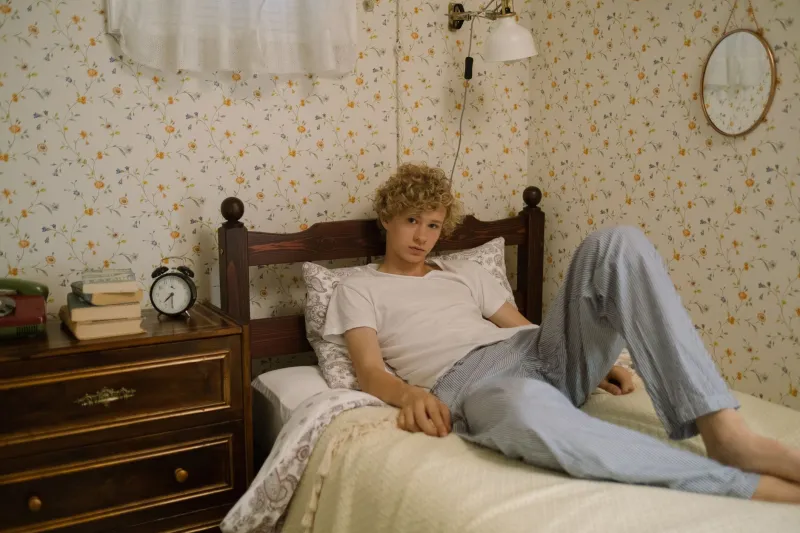
There was a ritual to it. You came home from school, dropped your backpack somewhere your parents would trip over it, grabbed something from the kitchen, and disappeared behind your bedroom door. Your parents knew roughly where you were. They didn't know exactly what you were thinking, who you were talking to, or what music you were listening to at a volume that made the walls pulse. And that was considered completely fine.
For most of the twentieth century, that was just what teenagers did. They withdrew. They created interior worlds that parents weren't invited into. The closed door was a developmental milestone as much as a piece of furniture, and the unspoken agreement in most American households was that you knocked before entering, and you didn't ask too many questions about what was happening on the other side.
Today, that door might as well be made of glass.
The Old Agreement
Parenting in the 1970s, 80s, and even the early 90s operated on a kind of pragmatic faith. You knew your kid was home. You knew they'd come down for dinner. Beyond that, the details were considered their business. Teenagers talked to friends on the phone — sometimes for hours, with the cord stretched as far as it would go toward some corner of the house — and parents had no idea what was being said. Letters were sealed. Diaries had locks. The contents of a teenager's mind were understood to be, largely, their own.
This wasn't negligence. It was a philosophy, even if nobody called it that. The thinking, usually unspoken, was that privacy was how young people figured out who they were. You needed room to be embarrassed without an audience. You needed space to hold opinions you'd later change. You needed the freedom to be a little dramatic, a little confused, and occasionally a little wrong — without all of it being logged somewhere.
Parents weren't absent. They were present in the ways that mattered: at dinner, at school events, during the hard conversations that happened when something actually went wrong. The relationship had breathing room built into it.
When the Phone Became the Window
The shift didn't happen all at once. It crept in gradually, each new tool arriving with a reasonable justification. First it was cell phones, given to teenagers for safety. Then came the ability to see call logs. Then smartphones with GPS. Then apps that showed parents exactly where their kid was, updated in real time, down to the street.
Now there are parental control platforms that log text messages, flag certain words, monitor social media activity, track screen time, and generate weekly reports. Some can activate a phone's microphone. Some can see deleted messages. The technology exists, and enough parents use it that teenagers have come to expect it — sometimes before their parents have even brought it up.
The justifications are real. The internet introduced risks that genuinely didn't exist when teenagers' biggest unsupervised danger was staying out past curfew. Predators, cyberbullying, eating disorder communities, radicalization pipelines — the threats are not imaginary, and no reasonable person would argue that parents should be entirely hands-off in the digital age.
But somewhere in the process of solving for those risks, the baseline changed. Monitoring became the default rather than the exception. And the closed bedroom door — that old symbol of earned independence — quietly stopped meaning anything.
What the Research Suggests, and What It Doesn't Settle
Studies on adolescent development have consistently found that autonomy and privacy are not luxuries for teenagers — they're functional necessities. The process of forming an independent identity requires space that isn't observed. When young people feel constantly watched, they don't necessarily make better decisions; they often just become better at hiding, or they stop developing the internal compass that comes from making decisions without a safety net.
There's also a trust dimension that's harder to quantify. Teenagers who know they're being monitored without their knowledge tend to report feeling less respected and less likely to come to parents when something actually goes wrong. The surveillance meant to protect them can quietly erode the relationship that would actually keep them safe.
None of this means the answer is simply to hand teenagers a phone and wish them luck. But it does suggest that the instinct to monitor everything, to eliminate uncertainty entirely, might be solving for the wrong problem.
The Drift Toward Control
What's interesting isn't that parenting changed — it always does, generation to generation. What's interesting is how quickly the cultural consensus shifted. A parent in 1988 who read their teenager's diary would have been considered to have crossed a serious line. A parent in 2024 who monitors their teenager's texts is often considered responsible.
The technology made it possible, and possibility has a way of becoming expectation. Once the tools existed, not using them started to feel like a choice — and a choice that came with implied judgment. Other parents were tracking their kids. Wasn't something wrong with you if you weren't?
Teenagers, for their part, have adapted in the way teenagers always do. Many have simply moved their real conversations to platforms their parents don't know about, or don't know how to use. The privacy hasn't disappeared — it's just migrated somewhere harder to find. Which may be the most teenage response imaginable.
Something Worth Sitting With
The closed bedroom door wasn't just about privacy. It was about a certain kind of respect — an acknowledgment that the person on the other side was becoming someone, and that process deserved a little room to breathe without an audience.
The world is genuinely different now, and pretending otherwise helps nobody. But the instinct to protect teenagers by watching them more closely is worth examining honestly. Because the thing teenagers needed most, back when the door stayed closed and nobody worried, wasn't surveillance. It was the quiet confidence that they were trusted to figure some of it out themselves.