The Doctor Who Knew Your Kid's Whole Story: What We Lost When Medicine Became a Transaction
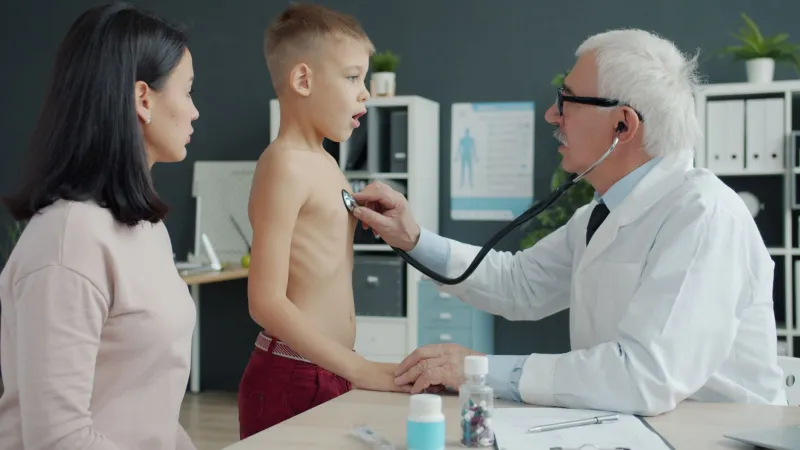
There are things you only understand in hindsight. One of them is what it meant to have a pediatrician who had been there since the beginning — who remembered the delivery, knew your child cried differently when it was an ear infection versus a stomach bug, and could look at a kid across the waiting room and already have a pretty good idea of what was going on before they even checked a chart.
That kind of medicine existed in America not so long ago. And most of us didn't realize we were losing it until it was already gone.
The Doctor Who Came to You
The house call is the detail people remember most, and with good reason. For much of the twentieth century, particularly in smaller cities and rural communities, a family doctor making a late-night visit wasn't a dramatic gesture — it was just what happened. You called, they came. They had a bag. They knew your address without looking it up.
But the house call was really just a symbol of something bigger: a medical relationship that was built over years, sometimes decades, and often across generations. Your pediatrician might have delivered you, then watched you grow up, then treated your own children. The family medical history wasn't stored in a database — it was stored in a human being who had actually lived through it alongside you.
That doctor knew that your son always spiked a high fever fast but came down just as quickly, and that it rarely meant anything serious. They knew your daughter had a mild reaction to amoxicillin and that your family had a history of underactive thyroid. They knew which parent was anxious and which one minimized symptoms. They knew the whole picture.
When the System Changed the Relationship
The shift didn't happen overnight, and it wasn't the result of any single decision. It was a slow accumulation of changes — insurance restructuring, rising practice costs, the consolidation of small independent offices into larger hospital networks, the explosion of specialists, and eventually the rise of urgent care clinics and telehealth platforms.
Each change made a certain kind of sense on its own. Urgent care centers meant you didn't have to wait three days to see someone about a sore throat. Telehealth meant you could get a prescription without driving across town. Electronic health records meant your information could theoretically follow you anywhere.
But something got lost in the reorganization. The relationship — that specific, accumulated, irreplaceable knowledge one doctor builds about one family over time — turned out to be harder to transfer than anyone anticipated.
Today, the average American child might see a different provider at nearly every visit, depending on who's available, which practice is in-network this year, or whether the family has moved. A pediatrician seeing a child for the first time at age seven is working from a chart, not from memory. They're reading about the kid, not remembering them.
What the Algorithm Doesn't Know
Modern medicine is, in many ways, extraordinary. Diagnostic tools are more sophisticated than anything a 1960s house-call doctor could have imagined. The data available at a physician's fingertips is staggering. Rare conditions get identified faster. Outcomes for serious illnesses have improved dramatically.
But data and knowledge aren't the same thing. A well-maintained electronic health record tells a new provider what happened. It doesn't tell them why, or what it meant in the context of this particular family, this particular child, this particular set of circumstances that the previous doctor understood intuitively.
Parents today often find themselves re-explaining their child's history at every appointment. They carry the continuity themselves, in their own heads, because the system no longer holds it for them. They become the institutional memory that the medical relationship used to provide.
And when something unusual happens — a symptom that doesn't fit neatly into a checklist, a behavioral change that might be physical or might be emotional — the transactional model struggles. It's optimized for common presentations and clear diagnoses. It's less equipped for the kind of slow pattern recognition that only comes from knowing a child across years.
The Trust That Took Time to Build
There's something else that the old model provided that's harder to quantify: trust. Not blind trust, but the earned, tested variety that develops when a doctor has been right about your kid enough times that you believe them when they say something is serious, and you believe them when they say it isn't.
That trust made parents less anxious, not more. When you knew the person on the other end of the phone, you were more likely to call when something felt off — and more likely to be reassured when they told you it was fine. The relationship itself was therapeutic.
Today, many parents default to Google before they call anyone, partly because they know the person they'll reach may not know their child at all. The first visit to an urgent care clinic or a telehealth screen isn't a conversation between people who know each other. It's a clinical intake.
What We're Left With
None of this is an argument for going backward. The old system had real failures — limited access, geographic inequity, blind spots that familiarity sometimes created. There are genuine advantages to the current model, and telehealth in particular has brought care to people who had very little of it before.
But it's worth sitting with what was traded away. The pediatrician who made house calls at midnight wasn't just performing a service. They were participating in a family's life. They held information that no chart could fully capture and offered a kind of reassurance that no algorithm can replicate.
The drift from that model to this one happened so gradually that most families barely noticed it was happening. One year your child had a doctor who knew them. A few insurance cycles later, they had a system that had records of them.
The records are thorough. The knowing is gone.