The Menu Was One Page and the Decision Took Thirty Seconds: What Happened to the Simple Meal Out
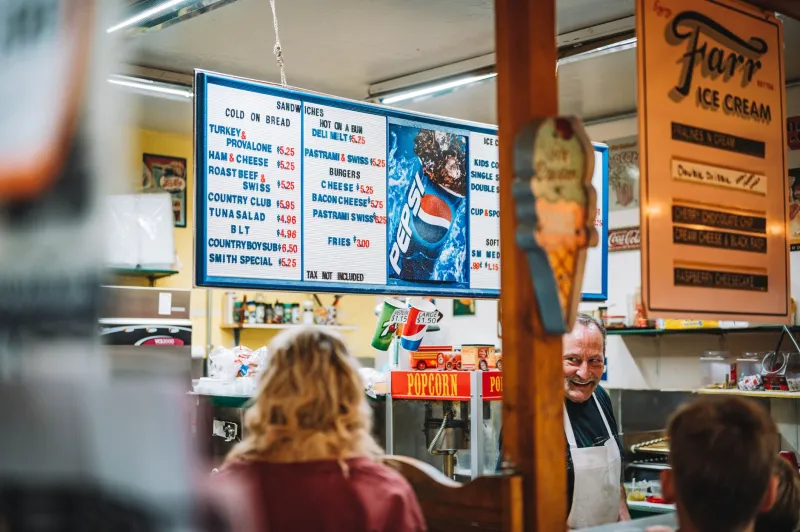
Picture a diner somewhere in middle America, sometime in the mid-1960s. Laminate countertops. A rotating pie case near the register. A menu printed on a single laminated card — maybe two sides if they were feeling ambitious. Meatloaf. A burger. Chicken fried steak. A couple of sandwiches. Soup of the day. Pie.
You sat down, you read it in under a minute, and you ordered. The waitress — who probably knew your name and your usual — wrote it on a small pad and called it back to the kitchen in shorthand. The food came out fast because the kitchen had made these exact dishes ten thousand times. You ate. You left a dollar tip and a compliment about the pie.
That experience, so ordinary it barely registered at the time, is almost gone now. And its disappearance says something interesting about what we thought we wanted versus what we actually got.
When a Menu Was a Promise, Not a Catalog
The old American diner and neighborhood restaurant operated on a principle that made obvious sense: specialize in what you do well, price it fairly, and do it consistently. A good diner wasn't trying to be everything. It was trying to be reliably itself, day after day, to the same people who'd been coming in since the place opened.
Menus were short because short menus were honest. A kitchen that claimed to do fifty things well was a kitchen lying to you. The places that lasted — the ones that became institutions, the ones people drove across town for — usually did a handful of things exceptionally. The chili was legendary. The pie crust was flaky in a way nobody could replicate. The burger came out exactly right every single time.
The relationship between a restaurant and its regulars was built on that consistency. The staff knew what you liked. Sometimes your order was started before you sat down. That wasn't just nostalgia-bait — it was a genuine feature of a dining culture built around community and repetition rather than novelty and choice.
The Expansion Begins
The first wave of menu expansion came with the rise of chain restaurants in the 1970s and 80s. Applebee's, TGI Fridays, Chili's — these places deliberately built their identity around variety. The laminated menu grew into a multi-page booklet with photographs. The message was abundance: whatever mood you were in, whatever anyone at the table wanted, we've got it.
For a while, it worked. American diners responded enthusiastically to the idea that nobody at the table needed to compromise. The vegetarian could order. The picky eater could order. The person who wanted a margarita and loaded potato skins at two in the afternoon could absolutely order.
But the proliferation didn't stop there. It accelerated. By the 2000s, independent restaurants were competing with chains partly by offering their own version of everything. Menus got longer. Customization options multiplied. The rise of dietary awareness — gluten-free, dairy-free, plant-based, keto-friendly — added another layer of complexity. A modern menu doesn't just list what the kitchen makes. It lists every possible modification, every substitution, every alternative.
The Delivery App as Infinite Hallway
If the restaurant menu got complicated, food delivery apps made the whole thing nearly philosophical. Open DoorDash or Uber Eats in any mid-sized American city on a Friday night and you're facing hundreds of restaurants, each with dozens of items, each with their own customization trees. Sushi next to barbecue next to Peruvian chicken next to a ghost kitchen that only exists as a name on an app.
Researchers who study consumer behavior have a name for what happens when options multiply past a certain point: choice overload. The more options you have, the harder the decision becomes, and the less satisfied you often feel with whatever you eventually pick. You chose the tacos, but what about the ramen? You'll never know if the ramen would have been better. The abundance that was supposed to make you happy has introduced a low-grade anxiety that didn't exist when the menu was a laminated card with eight items.
There's also something lost in the translation from restaurant to app. The old diner experience was social and sensory before the food even arrived — the smell of the place, the noise of the kitchen, the particular personality of whoever was behind the counter. An algorithm showing you star ratings and estimated delivery times in a grid is a fundamentally different kind of experience. It's efficient. It is not warm.
What the Short Menu Actually Gave You
Looking back, the constraints of the old way had real gifts inside them. When a menu offered eight things, you made a decision in thirty seconds and moved on. Your attention stayed on the people you were with. The meal was the occasion, not the research project that preceded it.
The cook in the kitchen had made the same dishes hundreds of times and had them dialed in. The ingredients were fresh because the kitchen wasn't managing fifty different proteins. The experience of eating somewhere that genuinely specialized in something — and knew it cold — is different from eating at a place that does everything adequately.
Some restaurants have figured this out and gone back. The tasting menu format. The single-focus concept restaurant. The place that makes only one kind of sandwich and makes it perfectly. These places tend to be packed, which might be telling us something about what we actually want versus what we keep ordering.
The Drift Toward Everything
The restaurant industry didn't set out to make dining harder. It set out to give people more of what they wanted. More options, more convenience, more flexibility. All of that arrived, right on schedule.
But the thirty-second decision, the waitress who knew your name, the meatloaf that came out right every single time — those things drifted away quietly while everyone was busy expanding the menu. They weren't replaced by something better. They were replaced by something bigger. And bigger, as it turns out, isn't always the same thing as better.