The Wrong Radio Station That Changed Everything: When Discovering New Music Was an Accident
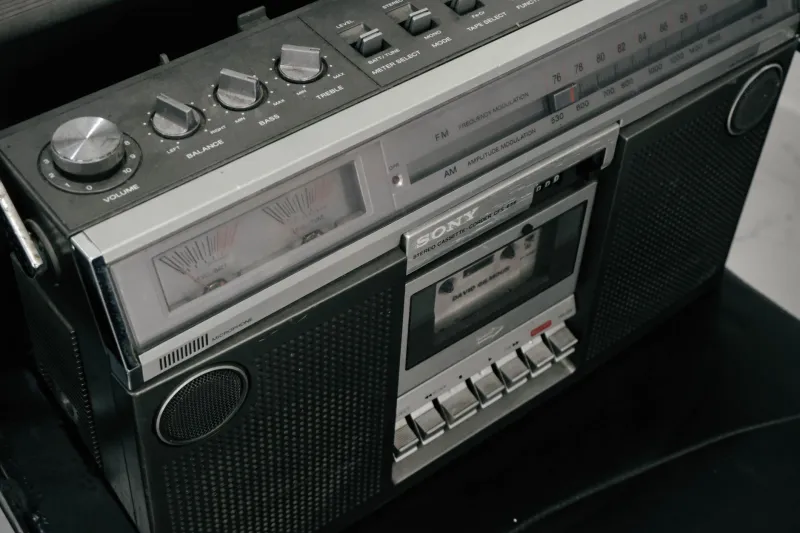
Ask almost anyone over thirty-five about a band or movie or book that genuinely changed them, and somewhere in the story there's usually an accident. A friend played something in the car. A video came on MTV after the one you were actually watching. You picked up a magazine in a waiting room and read a review of an album you'd never heard of, bought it on a whim, and spent the next six months listening to nothing else.
Those accidents don't happen much anymore. Not because we have less access to music or film or writing — we have infinitely more. They don't happen because the systems we use to find things have gotten very good at making sure we never wander too far from what we already know.
The Dial as a Discovery Engine
The FM radio dial was, in its way, a remarkable randomizing machine. You were in the car, you were bored, you started scanning. Most of what you hit was noise or something you'd already heard. But occasionally — maybe once in twenty spins of the dial — something stopped you. A guitar riff that felt unfamiliar in an interesting way. A voice you didn't recognize. A song that seemed to be doing something you couldn't immediately categorize.
You didn't choose that moment. It chose you.
The same thing happened in record stores. You went in for one thing, you left with three. The cover caught your eye. The guy behind the counter said something offhand. A track was playing on the store speakers and you asked what it was. The entire experience was structured around the possibility of surprise.
Video rental stores operated on similar logic. You came in for a specific title and it was checked out. So you wandered the aisles. You read the backs of boxes. You took a chance on something with an interesting description and a cast you half-recognized. Sometimes it was a waste of two hours. Sometimes it became a movie you watched every year for the next decade.
The Magazine That Knew Things You Didn't
Music and film criticism existed in a completely different relationship to its audience before the internet. Rolling Stone, Spin, Premiere, Entertainment Weekly — these publications had genuine authority because they were one of the few ways a curious person could learn about things outside their immediate geography and social circle.
A kid growing up in a small town in Ohio in 1991 might have had no way to encounter underground hip-hop, British shoegaze, or independent cinema except through a magazine review. The critic was a curator, a guide, a trusted voice who said: here is something you haven't heard of yet, and here is why it matters. You didn't have to agree with them. But you had to engage with their perspective before you could form your own.
That dynamic created a kind of cultural friction that turned out to be generative. You encountered things that challenged your taste. You read arguments for music you initially dismissed. You changed your mind about things. The discomfort of encountering the unfamiliar was built into the process of discovery.
What the Algorithm Optimizes For
The recommendation systems that govern Spotify, YouTube, Netflix, and TikTok are genuinely impressive pieces of engineering. They learn your preferences quickly and serve them back to you with increasing precision. The more you use them, the better they get at predicting what you'll engage with next.
That's exactly the problem.
A system optimized for engagement will always steer you toward what you already like, because what you already like is what you'll keep watching, keep listening to, keep clicking. The algorithm isn't trying to expand your taste. It's trying to keep your attention. Those are not the same goal, and over time they produce opposite results.
The listener who discovered three new artists a month by accidentally landing on an unfamiliar radio station now gets served an endless queue of music that sounds like the music they already approved of. The film fan who used to walk out of a video store with something they'd never heard of now scrolls through a catalog of suggestions that converge on a narrow band of familiar styles and familiar faces.
You can still find new things. But you have to go looking for them deliberately, which is a completely different experience from having them find you.
The Boredom That Made You Curious
There's something else worth naming: the role that boredom played in the old model of discovery. Flipping through radio stations required patience and a tolerance for not immediately finding what you wanted. Browsing a record store shelf required time you weren't necessarily sure was going to pay off. Reading a music magazine meant sitting with someone else's enthusiasm for things you hadn't decided you cared about yet.
Boredom, in other words, was the doorway. You wandered because there was nothing better to do, and in the wandering you found things that mattered.
The current entertainment environment is specifically engineered to eliminate that doorway. There is always something ready, always something queued up, always something playing. The gap between wanting something and having it has been reduced to nearly zero. And in closing that gap, the industry also closed off the wandering that the gap used to make possible.
What Gets Lost in the Echo
Cultures are shaped by shared surprises — by the things that spread sideways through a population because someone stumbled onto them and couldn't stop talking. Some of the most durable art of the twentieth century spread exactly that way: through word of mouth, through a DJ playing something unexpected at 2 a.m., through a magazine review that made someone drive forty minutes to a record store.
The algorithmic era produces a different kind of spread. Things go viral, but they go viral within communities that were already predisposed to receive them. The cross-genre, cross-demographic, accidental hit — the song that reached people who never would have looked for it — is increasingly rare.
The wrong radio station doesn't come on anymore. And some of the best things any of us ever found, we found there.