The Sacred Book That Knew Your Great-Great-Grandmother's Middle Name: How Americans Gave Up Their Family Stories
The Book That Held More Than Scripture
In farmhouses and tenements, mansions and modest homes across America, one book served a dual purpose that modern families have almost entirely forgotten. The family Bible wasn't just a source of spiritual guidance — it was the official repository of family history, genealogical record, and ancestral memory that connected each generation to everyone who came before.
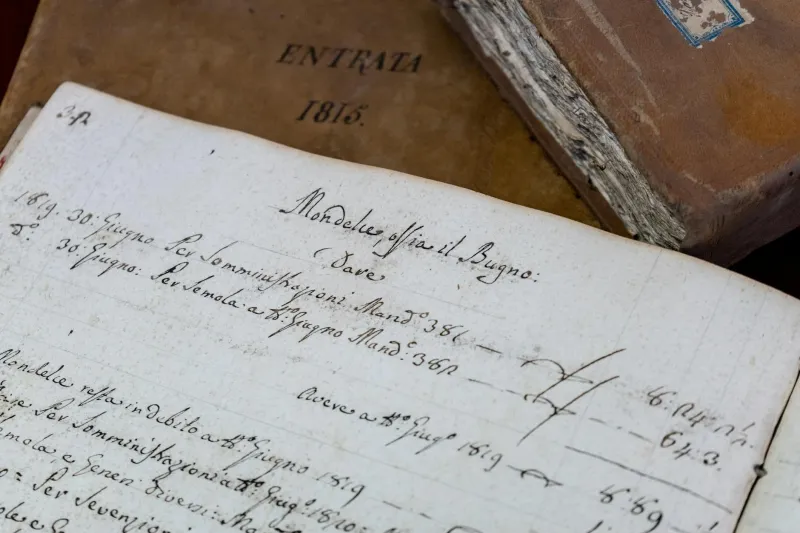
Those heavy, leather-bound volumes contained something more precious than gold leaf and tissue-thin pages. In the front matter, written in careful script by hands that understood permanence, lay the complete story of a family's journey through time: births recorded within days of occurrence, marriages documented with witnesses' signatures, deaths marked with dates that mattered to someone who remembered the deceased as more than just names and numbers.
When Memory Had Weight
The family Bible tradition represented something profoundly different from today's approach to ancestry. This wasn't research conducted by strangers in distant laboratories — it was living history maintained by people who understood that family stories needed physical homes and human caretakers.
Each entry represented a deliberate act of preservation. When Sarah Elizabeth was born on a cold February morning in 1892, her grandmother didn't just celebrate — she carefully recorded the date, time, and circumstances in the family Bible, understanding that this information would matter to people not yet born. When Uncle Thomas died in the influenza pandemic of 1918, someone grieving his loss still took time to document his passing, ensuring that his great-grandchildren would know he existed.
These handwritten records created an unbroken chain of memory that stretched back generations. Children grew up hearing stories about the people whose names filled those pages. They learned about great-aunt Martha's legendary cooking, grandfather's service in the Civil War, and cousin William's journey from Ireland to Ellis Island — stories that gave context and meaning to the dates and locations written in fading ink.
 Photo: Civil War, via i.fapality.com
 Photo: Ellis Island, via www.parc-camargue.fr
The Ritual of Recording
Maintaining the family Bible required ceremony and intention. The book lived in a place of honor — often on the parlor table or bedroom dresser — and was handled with appropriate reverence. When significant events occurred, the family gathered to witness the recording, understanding that they were participating in something larger than bureaucratic documentation.
Children learned early that this book was different from others in the house. They were taught to handle it carefully, to understand its importance, and eventually to take responsibility for maintaining its records. The tradition passed from generation to generation, along with the stories that transformed names into people and dates into family lore.
The Bible also served as the family's official documentation during an era when government records were inconsistent or nonexistent. When questions arose about birthdates, marriage details, or family relationships, the Bible provided authoritative answers. It was legal proof, historical record, and family treasure rolled into one irreplaceable volume.
More Than Names and Dates
What made the family Bible tradition powerful wasn't just the information it preserved, but the stories it anchored. The entry recording great-grandfather's birth in County Cork included details about the potato famine that drove his family to America. The marriage record from 1923 came with stories about the courtship that survived the Great War and the wedding reception held in a neighbor's barn.
 Photo: County Cork, via www.priyamstudycentre.com
These weren't just genealogical facts — they were family mythology that gave meaning to existence. Children learned they were part of something larger than their immediate family, connected to a chain of ancestors who had faced challenges, made sacrifices, and built the foundation for their current lives.
The physical nature of the records added weight to their significance. Unlike digital files that exist in abstract space, the family Bible occupied real space in the home. Its presence reminded family members daily of their connection to the past and their responsibility to the future.
The Great Forgetting
Sometime in the mid-20th century, American families began losing interest in maintaining their own histories. Post-war prosperity and social mobility meant families scattered across the country, breaking the geographic connections that made shared record-keeping practical. Nuclear families replaced extended clans, and the assumption of responsibility for family memory became unclear.
The rise of official government documentation — birth certificates, marriage licenses, death certificates — made the family Bible seem redundant. Why maintain handwritten records when the state kept official files? This shift from family-maintained to government-maintained records represented more than administrative efficiency; it marked the beginning of Americans' disconnection from their own stories.
Television and popular culture began replacing family stories as primary sources of entertainment and identity formation. Instead of learning about their own ancestors' adventures, children absorbed fictional narratives from shows and movies. The immediate and dramatic always trumped the personal and historical.
The DNA Revolution
Today's Americans have outsourced their family history to commercial genetics companies that promise to unlock ancestral mysteries through saliva samples and algorithmic analysis. Millions pay for tests that reduce their heritage to percentage breakdowns and geographic heat maps, learning they're "23% Irish, 15% German, 8% Scandinavian" without understanding what those numbers actually mean.
These services excel at identifying genetic markers and geographic origins, but they can't reconstruct the human stories that gave those statistics meaning. They can tell you that your ancestors came from Ireland, but not why they left, what they sacrificed to build new lives in America, or how their decisions shaped the opportunities you inherited.
The contrast is striking: families once maintained detailed records of their own stories but now pay corporations to tell them who they are based on genetic algorithms and databases compiled from other people's DNA.
What the Laboratory Can't Capture
DNA analysis provides fascinating insights into human migration patterns and genetic inheritance, but it can't reconstruct the texture of family life that made those migrations meaningful. The family Bible recorded not just that great-grandmother was born in 1887, but that she was the first in her family to learn to read, that she taught school until she married, and that she insisted all her children receive educations regardless of their gender.
Those human details — the struggles, triumphs, personality quirks, and family traditions — transformed ancestors from statistical data points into real people whose lives had weight and meaning. The stories explained not just where families came from, but how they developed the values, traditions, and characteristics that shaped subsequent generations.
Modern genetic testing can identify potential relatives around the world, but it can't recreate the intimate knowledge that came from growing up with family stories. It can suggest you might be related to someone in County Cork, but it can't tell you about the grandmother who saved money in a coffee tin to bring her siblings to America, or the uncle who played fiddle at every family gathering until he was ninety-three.
The Inheritance We Stopped Claiming
The family Bible tradition represented more than record-keeping — it embodied a different relationship with time and identity. Families understood themselves as part of ongoing stories that began before their birth and would continue after their death. This perspective created responsibility for both preserving the past and building foundations for the future.
Children who grew up with family stories developed different relationships with their own lives. They understood themselves as inheritors of specific legacies and contributors to ongoing narratives. Their individual choices mattered not just for personal happiness, but for family continuity.
This sense of historical continuity provided stability and purpose that many Americans now seek through therapy, self-help, and spiritual exploration. The family Bible offered something that DNA tests and genealogy websites can't replicate: the knowledge that you belong to something larger than yourself, something with weight and history and human meaning.
What We're Trying to Buy Back
The popularity of commercial ancestry services reveals deep hunger for the connection that families once maintained naturally. Americans pay hundreds of dollars to learn about their heritage because they've lost the stories that previous generations preserved carefully in leather-bound books that sat on living room tables.
We're trying to use technology to recover what we abandoned through indifference: the knowledge of where we came from and how we got here. But the laboratory can only provide data, not the human context that transformed that information into family identity.
The family Bible tradition wasn't perfect — it sometimes excluded uncomfortable truths, reflected the biases of its time, and could be lost to fire, flood, or family discord. But it represented something irreplaceable: the understanding that family history belongs to families, not corporations, and that the stories connecting us to our ancestors are too important to leave to strangers, no matter how sophisticated their algorithms.
Today's Americans know more about their genetic makeup than any previous generation, yet many feel disconnected from their ancestry in ways their great-grandparents never experienced. We've gained scientific precision while losing human intimacy, trading family stories for corporate data analysis, and wondering why knowing our percentages doesn't satisfy our hunger for belonging.