He Knew How Many Bottles to Leave Before You Said a Word: The Human Side of Home Delivery
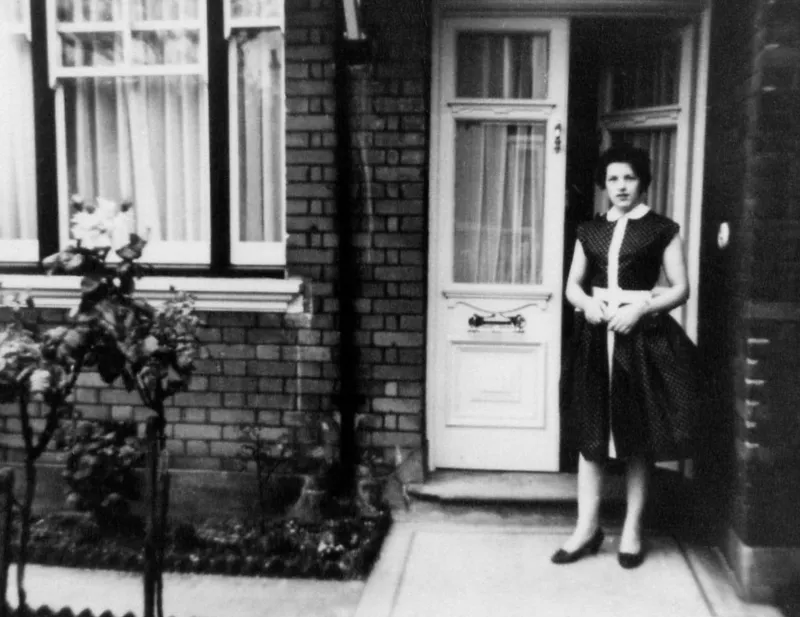
Sometime in the early 1950s, a milkman in suburban Cleveland noticed that the Henderson family had stopped leaving out their usual four-bottle order slip. Two weeks in, he knocked on the door instead of just leaving the standard delivery. Mrs. Henderson answered looking exhausted. New baby, she explained. He adjusted the order without being asked — two extra quarts, a pint of cream — and left a note that said Congratulations. I'll check back next week.
 Photo: Henderson family, via d2pzb3b6cafvxw.cloudfront.net
Nobody told him to do that. There was no app sending him a notification. He just knew the household, the way you know the rhythms of something you've been paying attention to for years.
The Route Was the Relationship
At the peak of American home milk delivery in the late 1940s and early 1950s, roughly half of all milk consumed in the United States arrived at front doors before sunrise. The milkman wasn't a novelty or a luxury — he was infrastructure. So was the bread route driver who came three times a week. So was the iceman, before refrigerators made him obsolete. So was the dry goods peddler who worked the rural routes with a truck full of staples.
These weren't anonymous transactions. These were people who came to your door repeatedly, over years, and in doing so accumulated an intimate working knowledge of your household. They knew how many kids you had. They knew when someone was sick because the order changed. They knew when a family was struggling financially because the note in the bottle asked to skip a delivery. They knew, often before the neighbors did, when something significant had shifted in a family's life.
The milkman knew you were pregnant before you'd told anyone, because you'd quietly added a second quart of milk to the standing order two weeks running.
A Layer of Watchfulness Nobody Organized
There's a concept in urban planning and community studies sometimes called informal surveillance — the idea that neighborhoods are safer and more connected when people are simply present and paying attention. The milkman was one of the original practitioners of this, without ever having a name for it.
If an elderly customer didn't leave out her empties two mornings in a row, a good route driver noticed. He might knock. He might mention it to a neighbor. In at least a few documented cases, dairy delivery drivers were the first people to realize that a customer had fallen ill or died alone. They weren't social workers. They weren't checking in as part of any program. They were just people who paid attention to the households on their route because they'd been paying attention to those same households for years.
This kind of informal community watchfulness was woven into the fabric of daily commerce in a way that's genuinely hard to reconstruct today. It didn't require a neighborhood app or a community Facebook group. It happened because the same human being showed up at the same door, day after day, and noticed things.
The Box on the Porch Doesn't Know You're Home
Contrast that with how home delivery works in 2025. A driver you've never met, working for a company you interact with only through an algorithm, leaves a package on your porch at a time you didn't choose and drives away before you've registered that anything happened. The transaction is fast, cheap, and completely impersonal — and those qualities are generally treated as strengths.
In fairness, the modern system does things the milkman never could. It delivers virtually anything, anywhere, often within a day. It scales in ways that a neighborhood route never could. Nobody is arguing that we should go back to a world where your grocery options were whatever fit on a delivery truck.
But something real was exchanged in that efficiency trade. The cardboard box doesn't know that you usually order two cases of sparkling water but only ordered one this month. It doesn't notice that you haven't been outside in a week. It doesn't adjust the delivery based on a quiet sense that something might be off. It just sits there on the porch, getting rained on, waiting to be brought inside.
What the Route Drivers Knew About Community
The home delivery tradespeople of the mid-twentieth century were, in a real sense, the connective tissue of American neighborhoods. They moved through residential streets at hours when most people were still in their routines, and they carried information — not gossip exactly, but awareness — from house to house in ways that kept neighborhoods loosely knit.
A good milkman knew which families were friendly with each other and which weren't. He knew who was reliable about settling the weekly bill and who needed a gentle reminder. He knew the dog's name, the kids' approximate ages, and whether the family preferred their bottles left at the side door or the front. This knowledge wasn't strategic. It accumulated naturally, the way any knowledge accumulates when you show up somewhere consistently over time.
That consistency is what modern delivery is structurally incapable of providing. Routes change. Drivers rotate. The goal is efficiency, not familiarity. And so the quiet social function that home delivery once served — that layer of human attention woven into the ordinary commerce of a neighborhood — has no replacement.
A Different Kind of Logistics
It would be easy to romanticize the milkman era without acknowledging its limitations. Routes were almost exclusively male. The work was physically grueling and poorly paid. The system only served certain neighborhoods reliably, and rural access was always uneven.
But the thing worth remembering, as we watch another anonymous van pull away from the curb without slowing down, is that delivery was once a relationship. It was built on repetition and attention and the slow accumulation of trust between a household and a person who showed up reliably at the door.
The Henderson baby grew up. The milkman retired. The bottles stopped coming sometime in the mid-1960s when a supermarket opened two miles away and it just made more sense to drive.
But for a long time, someone knew to leave an extra quart of cream without being asked. That's not nothing.