Nobody Talked to the Stranger Next to Them, and That Was the Whole Point
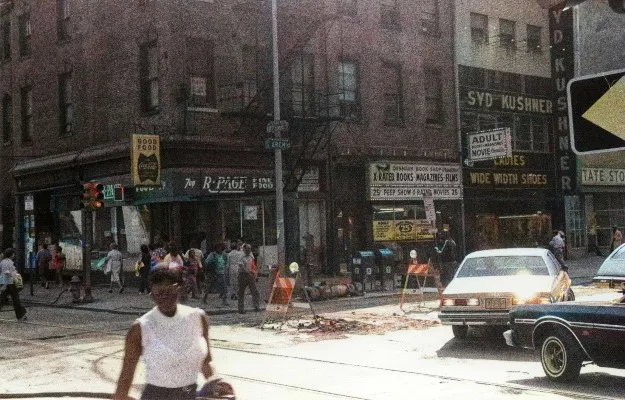
Photo: Acabashi, CC BY-SA 4.0, via Wikimedia Commons
There was a particular kind of afternoon that used to exist in America. You'd show up at the DMV or the doctor's office or a gate at O'Hare, take a number or check in at a desk, and then you'd sit. The chairs were usually uncomfortable. The lighting was usually bad. The magazines on the side table were usually two months old, their subscription labels half-peeled by someone who'd already been there longer than they wanted to be.
And you waited. Not efficiently. Not productively. Just waited, in the same room, with everyone else who also had nowhere to go.
The Room Where Time Moved Differently
Waiting rooms used to be their own kind of ecosystem. Walk into a pediatrician's office in 1987 and you'd find a cross-section of the whole neighborhood — young mothers, retired men with appointments they'd been putting off, a teenager dragged in by a parent, a few kids turning the magazine rack into a toy. Nobody was thrilled to be there. That was kind of the point.
The shared inconvenience was the social glue. You'd glance over at someone's magazine, and they'd tilt it toward you without thinking. You'd overhear a conversation about a flight delay and nod in commiseration. An older woman might strike up a remark about the weather, and fifteen minutes later you'd know she had grandchildren in Phoenix and strong opinions about the postal service. Not because you sought that out. Because there was simply nothing else happening.
Barbershops had this quality too — maybe more than anywhere else. The wait at a good barbershop wasn't a problem to be solved; it was part of the experience. You'd flip through a Sports Illustrated from three weeks ago, half-listen to whatever argument was unfolding in the chairs, and ease into the rhythm of the place. The conversation wasn't curated or targeted. It was just ambient human life, moving at its own pace.
The Moment the Room Emptied Out
The smartphone didn't arrive with a warning. It just showed up and quietly rearranged the furniture of daily life. By the early 2010s, the waiting room had transformed into something stranger — a room full of people, each of them completely alone.
The magazines are still there in some places. Nobody touches them. The chairs haven't changed. But something fundamental has. The moment stillness arrives, the phone comes out. It's reflexive now, almost involuntary, the way you'd reach for your wallet when a check arrives. Stillness, for most Americans, has become a problem that needs to be solved.
What replaced the shared wait wasn't connection — it was the illusion of it. You're technically consuming content, technically in touch with people, technically doing something. But you're not in the room anymore. You've left, without leaving.
What Waiting Used to Do to People
Here's the thing that tends to get skipped in conversations about attention spans and screen time: waiting wasn't just dead time that technology has helpfully filled. It was doing something.
It was making people sit with themselves. It was creating low-stakes conditions for human contact — the kind that doesn't require a reason or a plan, the kind that just happens because two people are stuck in the same place with nothing to do but notice each other. That's a surprisingly rare thing to engineer deliberately. It used to happen by accident, constantly.
Airport gate areas before widespread smartphone adoption were remarkable social spaces. Delayed flights, in particular, had a way of turning strangers into temporary communities. People shared outlets, shared snacks, shared frustration, traded information about connecting flights. A two-hour delay was miserable, but it was miserable together. There's a version of that experience that a lot of Americans under thirty have simply never had.
The Texture of Shared Inconvenience
The old waiting room also had a sensory texture that's worth naming. The rustle of magazine pages. The hum of a television mounted too high, tuned to a channel nobody would have chosen. The way a name being called from across the room would make everyone look up for a second — not because it was their name, but because that's what people do when something happens nearby.
Those small, unremarkable moments of shared attention were a form of social fabric. Thin fabric, sure. But fabric. The kind that reminded you, without announcing it, that the people sitting near you were real people with real lives, not just background figures in your own story.
What We're Left With
None of this is an argument for bringing back bad magazines or longer wait times. The DMV was never anyone's idea of a good time. But it's worth sitting with the question of what we actually traded away when we outsourced every moment of stillness to a screen.
We traded the accidental conversation. The shared eye-roll at the delay announcement. The strange comfort of being inconvenienced alongside other people. The experience of being in a room — fully, physically, attentively in a room — with strangers who were just as stuck as you were.
That version of waiting wasn't efficient. It wasn't optimized. It was just human, in the most ordinary and underrated sense of the word. And it's mostly gone now, replaced by something faster and lonelier, slipping away so gradually that most of us didn't notice it leave.