The Booklet in the Box: When Buying Something New Meant Getting Real Answers
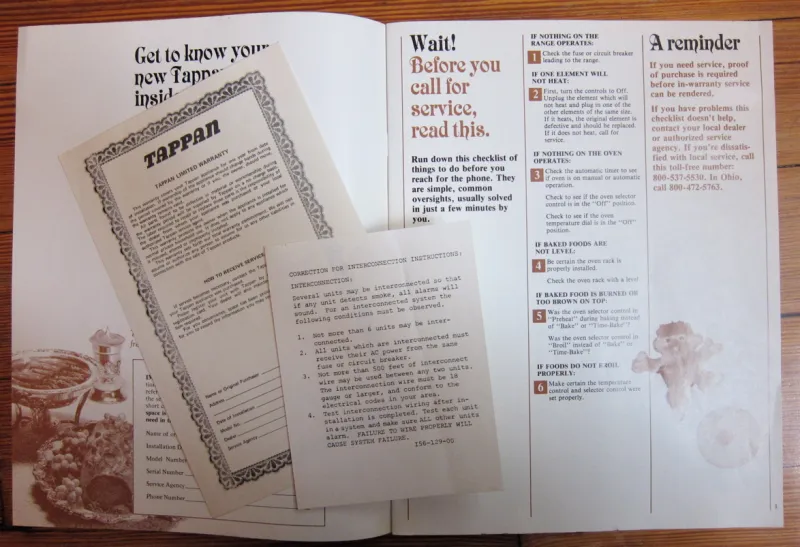
Photo: vintage appliance instruction manual booklet 1980s product documentation, via 1.bp.blogspot.com
You remember the feeling. You'd pull back the styrofoam, lift out the machine — a blender, a cassette deck, a cordless drill — and there underneath it, folded neatly or bound with a staple, was the manual. A proper one. Sometimes twenty pages. Sometimes sixty. Occasionally a small book with a laminated cover and a table of contents organized by task.
You didn't always read it front to back. But you knew it was there. And when something went wrong, or when you wanted to do something more than the basics, you reached for it.
That booklet represented a certain kind of respect — from manufacturer to buyer. It said: this product is complex enough to deserve explanation, and you are capable of understanding it.
What a Good Manual Actually Contained
The instruction manuals of the 1970s through the 1990s were a specific cultural artifact, and they varied enormously by product. A Craftsman table saw came with detailed safety diagrams, blade adjustment specifications, and maintenance schedules. A KitchenAid stand mixer included charts for attachment use, dough capacity guidelines, and troubleshooting steps organized by symptom. A Sony Walkman manual walked you through belt replacement, head cleaning, and battery contacts — because the assumption was that you'd own this thing for years and would want to keep it running.
The writing was direct and practical. The diagrams were hand-drawn or cleanly photographed. The index was functional. Someone had sat down and thought: what does a person actually need to know? And then they wrote it down.
Many of those manuals even included wiring diagrams, parts lists with item numbers, and information about where to order replacement components. They assumed you might want to fix the thing yourself, and they gave you the tools to try.
When the Booklet Started Getting Thinner
The shift didn't happen overnight. Through the 1990s and into the early 2000s, manuals began to shrink. The full-size booklet gave way to a quick-start guide. The quick-start guide gave way to a folded single sheet with six steps and a warning label. The sheet gave way to a URL printed on a card: For full documentation, visit our website.
A few forces drove this change simultaneously. Printing costs were one factor — a forty-page manual in six languages adds real expense at scale. The rise of the internet provided a convenient alternative, at least in theory. And as product cycles accelerated, manufacturers had less incentive to invest in documentation for something they expected you to replace in three years anyway.
Planned obsolescence is part of the story here. A product designed to last a decade needs a manual that helps you maintain it. A product designed to be replaced when the next model launches doesn't need much documentation at all.
The YouTube Dependency
Here's what replaced the booklet: a search bar.
When your dishwasher throws an error code today, you don't look it up in a manual. You type the model number into YouTube and hope someone in Minnesota filmed themselves fixing the same problem eighteen months ago. Sometimes you find exactly what you need. Sometimes you find a video that's close but not quite right, for a slightly different model year, and you improvise. Sometimes you find nothing useful and end up on a Reddit thread from 2019 where the top comment says just call a technician.
The crowdsourcing of product knowledge is genuinely impressive in some ways. There's more collective documentation on the internet than any single manufacturer could produce. Communities on forums like Reddit's r/appliancerepair or iFixit's guides have saved countless appliances from landfills.
But there's a difference between a manufacturer providing answers and a community discovering them through trial and error. One says: we built this, we understand it, here's what you need to know. The other says: figure it out, good luck.
What We Lost Beyond the Paper
The instruction manual carried something beyond its practical content. It established a relationship between you and the object. Reading it — even skimming it — gave you a working mental model of how the thing functioned. You understood, at least roughly, what was happening inside the machine when you used it.
That mental model made you more capable and more confident. It meant that when something behaved unexpectedly, you had a framework for diagnosing why. It made you a user in the fullest sense of the word, rather than a person who pressed buttons and hoped.
There's also something worth noting about what it felt like to open a box and find a thorough manual waiting for you. It felt like the company behind the product had done their job completely. The product wasn't finished when it left the factory — it was finished when it arrived in your hands with everything you needed to use it well.
The Objects We Stopped Understanding
We live surrounded by technology we don't understand, and for the most part we've made peace with that. The phone in your pocket runs on processes no one expects you to comprehend. The car you drive is essentially a rolling computer system that requires a dealership's diagnostic equipment to service.
But there's a spectrum. At one end are genuinely complex systems that require professional expertise. At the other end is a stand mixer, a circular saw, a dehumidifier — things that a reasonably capable adult can understand and maintain, if someone bothers to explain them clearly.
The instruction manual was the bridge between manufacturer and user for all those middle-ground products. When that bridge got pulled up, we didn't suddenly become less capable of understanding things. We just stopped being given the chance to try.
Somewhere in a drawer — maybe yours, maybe your parents' — there's still a manual for something. Probably for something that still works.